Before You Vaccinate: Puppies, Boosters and Titre Testing
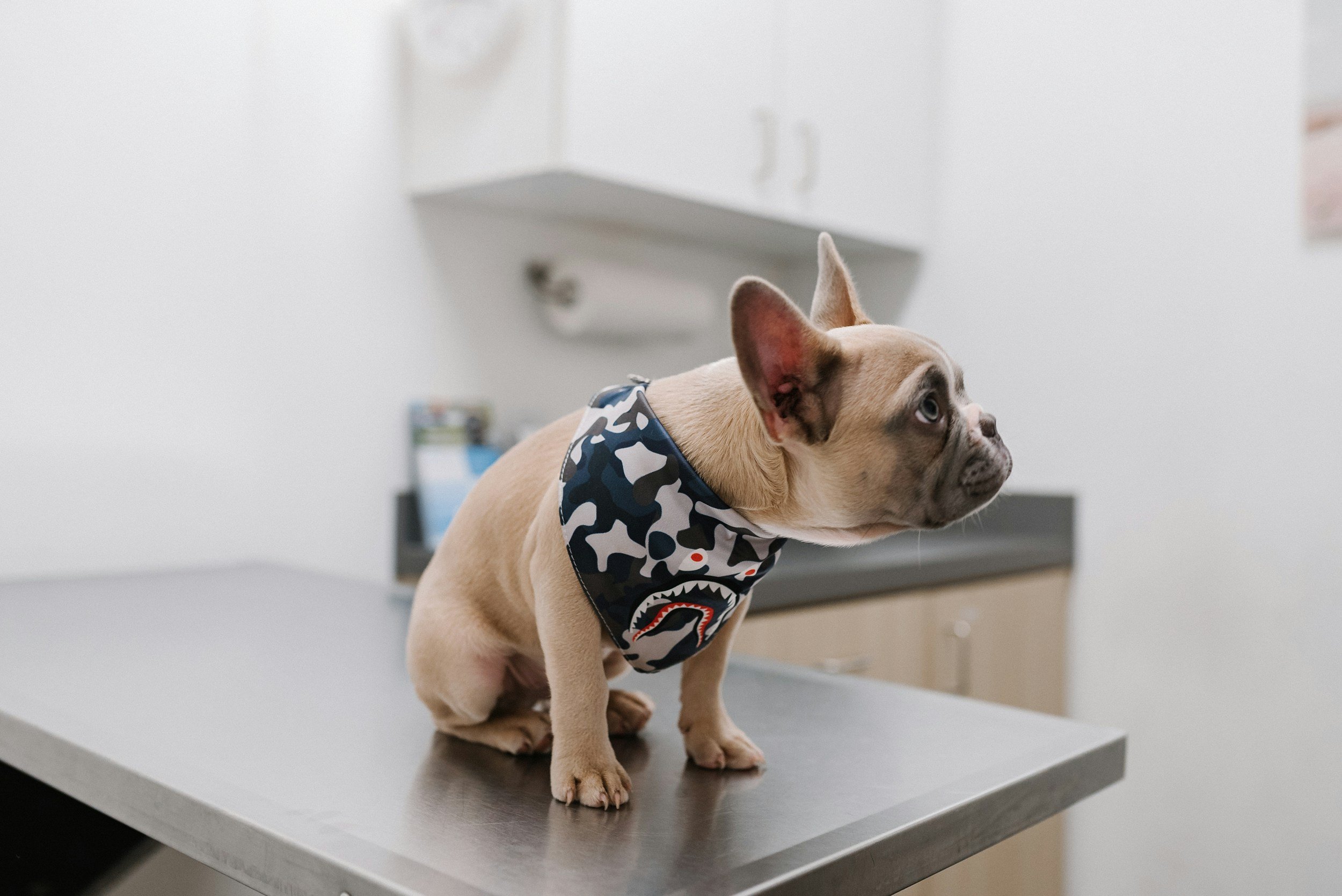
Most owners are never told that an annual booster for the core diseases may not be needed. The reminder card arrives, the appointment is booked and the injection is given, usually without anyone asking whether your dog is already protected. This post follows vaccination through your dog's life, from the first puppy jabs to the senior years, and explains how a titre test lets you vaccinate on evidence and not on a calendar. I want to be clear about what this isn't. Parvovirus, distemper and hepatitis are serious, often fatal diseases, and this isn't an argument against protecting your dog. It's an argument against vaccinating automatically, and for checking first.
The Core Vaccines
The core vaccines protect against three diseases:
Canine parvovirus
Canine distemper
Canine adenovirus (infectious canine hepatitis)
These are recommended for every dog. Other vaccines, such as leptospirosis and kennel cough, are non-core and depend on your dog's lifestyle. I come back to those later.
Puppies: Where It Starts
To understand why puppy vaccination is done the way it is, you need to start with the mother.
Colostrum and maternal antibodies: That's why levels vary from litter to litter, and even between puppies in the same litter. These maternal antibodies protect the puppy during its most vulnerable weeks. They fade over time, with a half-life of around 9 to 10 days, so they gradually disappear over the first 16 weeks or so.A newborn puppy is born with almost no antibodies of its own. Its protection in the first weeks comes from its mother, mainly through colostrum, the first milk, which is rich in antibodies. A puppy has to drink it in the first 24 hours of life to absorb them. How much protection a puppy gets depends on how much colostrum it drinks and on how high the mother’s own antibody levels are, which comes down to her vaccination and exposure history. That’s why levels vary from litter to litter, and even between puppies in the same litter. These maternal antibodies protect the puppy during its most vulnerable weeks. They fade over time, with a half-life of around 9 to 10 days, so they gradually disappear over the first 16 weeks or so. If you’re able to keep your puppy with its mother until 12 weeks, as I mentioned in Are We Loving Our Dogs to Death?, the extra time with her has benefits beyond immunity.
Why they get in the way of vaccines: The same antibodies that protect a puppy also neutralise the vaccine. Most puppy vaccines contain a weakened live virus, and a puppy's immune system only learns from it if the virus is able to stimulate a response. If a mother's antibodies are still circulating at a high enough level, they bind to the vaccine virus and neutralise it before the puppy's own immune system has a chance to notice it. The injection is given and recorded, but no real immunity has been established. This is called maternal antibody interference, and it's the most common reason for vaccine failure in young puppies.
The window of susceptibility: There's an awkward gap. As maternal antibodies fall, there comes a point where they're too low to protect the puppy from infection, but still high enough to block a vaccine. That's the window of susceptibility, and it falls somewhere between about 6 and 16 weeks, depending on the litter. It's particularly a problem with parvovirus.
Why puppies get two or three rounds: Because no one can know exactly when each puppy’s maternal antibodies will drop low enough for the vaccine to work, puppies are vaccinated more than once, a few weeks apart, in the hope that one of the doses lands after the antibodies have gone. In the UK that’s usually two injections, three to four weeks apart. The WSAVA guidelines recommend a first dose at 6 to 8 weeks and then a dose every two to four weeks, which works out at about three, with the final dose given at 16 weeks or older, followed by a booster at 6 or 12 months. In practice, the earlier doses are largely guesses.
Why I question routine early rounds: The early doses can only work if the puppy’s maternal antibodies have already gone, and in many puppies they haven’t. The dose that counts is the one given at 16 weeks or older. The WSAVA guidelines say that if a puppy can only receive a single vaccination, it should be given at 16 weeks or later. Every injection also carries more than the weakened virus. Depending on the product, it can contain adjuvants, preservatives, stabilisers, antibiotics and proteins left over from the culture medium used to grow the vaccine, and these are the components that can trigger reactions in some dogs. A dose that can’t produce immunity still delivers all of them. That’s why I’m uncomfortable with giving a young puppy two or three rounds of injections as a matter of routine, when the early ones may add exposure to those ingredients without adding protection.
The trade-off, and how I did it: The reason for the early doses is protection. Parvovirus and distemper are serious, and a puppy in the window of susceptibility is vulnerable. The most effective way I know to reduce the risk is to keep your puppy away from other dogs until they're fully protected, which means up to 16 weeks. I did this with my own dogs, and in addition to their health, their behaviour has been great.
It also has a benefit people don't expect. Puppy classes and park meetings are often sold as essential socialisation, but being around lots of other dogs isn't always good for a puppy. They can learn to look to other dogs for excitement instead of to you, and a rough or frightening encounter can leave a mark. In those first months I wanted my puppies to focus on me, so I spent the time building our bond. Calm, steady time together does more for a puppy than a chaotic play session. That doesn't mean staying indoors. You can still take your puppy out and show them the world. The key is to keep them off the ground and away from other dogs: carry them, or put them in a pram or stroller. It's the same kind of pram I recommend for older dogs in my post on Caring For A Senior Dog. They can then watch traffic, people, bikes and everyday life from a safe place, which is what good socialisation is really about. Parvovirus can survive in the environment for a long time, so places other dogs visit are best avoided at ground level until your puppy is protected. Home socialisation with calm, healthy dogs you know and trust is a good alternative to classes. However please talk to your vet before deciding, since many will recommend the standard schedule, and it's a decision you need to weigh up based on your lifestyle.
Checking it worked: Even at 16 weeks or older, a small number of puppies don’t respond. A titre test a few weeks after the final vaccination, which the WSAVA guidelines suggest at around 20 weeks if there’s concern, confirms whether your puppy is protected. It’s the first use of the approach that runs through the rest of this post: check first, then decide.
Adult Dogs: The Yearly Booster
Once the puppy stage is over, most dogs settle into the same routine. A reminder card arrives every year, the dog goes in for a booster, and the certificate is stamped.
How long does immunity actually last? The international vaccination guidelines from WSAVA recommend that core vaccines are given no more often than every three years after the puppy course and first booster, because the duration of immunity is many years and in some dogs lasts a lifetime. Challenge and blood-test studies cited in the guidelines have found immunity from core vaccines lasting nine years or longer. Most UK-authorised core vaccines carry the same three-year interval.
So why the annual reminder? Partly habit, partly because the annual injection usually combines the core vaccines with components that may need a yearly dose, such as leptospirosis and, for boarding, kennel cough. To be honest, it’s partly money too. Vets run businesses, vaccination appointments are a dependable source of repeat income, and annual booster reminders are built into practice systems to bring owners back every year. The UK Competition and Markets Authority found in its 2026 review that vet prices rose by 63% between 2016 and 2023, against 32% general inflation, and that pet owners were often paying more than they should without enough information to make confident choices. That doesn’t mean any individual vet is acting in bad faith, and many value the annual visit as a health check. But it’s fair to ask whether a reminder reflects your dog’s needs or the practice’s calendar, particularly when the guidelines for the core vaccines have moved to every three years or longer. The core part of the injection may not need repeating every year. A dog who has a booster every year for diseases they’re already protected against is receiving a medical procedure they don’t need, along with the other ingredients in each injection, such as adjuvants, preservatives and stabilisers, which can trigger reactions in some dogs and which I wouldn’t want my dogs exposed to.
Titre Testing: Replacing the Yearly Booster
This is where a titre test comes in. A titre test is a simple blood test that measures the level of antibodies in your dog's blood against a specific disease. If the antibodies are present, your dog has protective immunity from their earlier vaccinations, and there's no need for a booster for that disease. You aren't guessing. You have evidence.
What it can test: Distemper, parvovirus and adenovirus (hepatitis), the three core diseases
What it can't replace:
Leptospirosis. There’s no reliable titre test that serves as an alternative to the lepto vaccine, and the vaccine needs boosting about once a year. Whether to vaccinate for lepto is a separate decision, based on your dog’s lifestyle and where you walk, and it’s one to discuss with your vet. Risk also depends on the country you live in, since the strains of lepto that circulate, and the vaccines that cover them, differ from place to place, so local advice matters.
Kennel cough. This has its own vaccine, and it’s only worth considering for dogs whose lifestyle brings them into contact with lots of other dogs, such as boarding kennels, daycare, shows or busy training classes. Kennel cough isn’t a single disease but a complex of viruses and bacteria, and it spreads wherever dogs mix. For most healthy adult dogs it’s a mild illness, with a harsh, hacking cough that clears up on its own, usually within one to two weeks, with rest. Treatment is mainly supportive: let your dog rest, avoid excitement, use a harness and not a collar so there’s no pressure on the throat, and keep them away from other dogs while they’re coughing so it doesn’t spread. Antibiotics aren’t usually needed unless there are signs of pneumonia or the illness lasts more than about ten days. Where it matters is in more vulnerable dogs, since puppies, older dogs, flat-faced breeds and dogs with other health problems are more at risk of it turning into pneumonia, so see your vet promptly if your dog seems lethargic, stops eating, has a fever or nasal discharge, or has any difficulty breathing. The vaccine has limits too: it covers some of the organisms involved but not all, and it doesn’t always prevent infection, though it may lessen symptoms. The reason many owners have it done is practical, because most boarding kennels and daycares require it. If your dog doesn’t use those services, you may not need it, and choosing care that doesn’t involve a kennel, such as a sitter who stays in your home, avoids the question. It’s one to discuss with your vet.
Rabies for travel. If you take your dog abroad, a rabies vaccination is a legal requirement under the Pet Travel Scheme. Your dog must be microchipped first, be at least 12 weeks old, and be vaccinated at least 21 days before travel. A titre test doesn’t replace it. Rabies vaccines are different from the core vaccines above. They’re inactivated (killed) and so need an adjuvant, and brands differ in what else they contain. The UK datasheet for Nobivac Rabies lists aluminium phosphate as the adjuvant and thimerosal, a mercury-containing preservative, at 0.1 mg per dose, whereas Rabisin, which comes as a single-dose vial and is also licensed in the UK, uses an aluminium hydroxide adjuvant and doesn’t list thimerosal in its composition. Holistic vets including Dr Judy Morgan and Dr Jean Dodds advise asking for a thimerosal-free rabies vaccine, and Dr Dodds also recommends giving it at least four weeks apart from other vaccines. You’re entitled to see the datasheet for any vaccine your dog is given, so ask your vet which product they use and whether they can supply a thimerosal-free one. Some countries also require annual revaccination, so check the rules for where you’re going. The Rabies Challenge Fund has been studying whether protection lasts longer than the licensed three years, which is one to follow if you’re looking to reduce how often your dog is vaccinated.
A positive result means your dog has protective immunity, and a booster isn't needed for that disease. A low or negative result means your dog may not be protected, and you should discuss revaccinating with your vet. Some dogs have immune memory that isn't fully captured by an antibody level, so a negative result needs a conversation, not an automatic assumption either way. Not all tests are equal. A 2025 study comparing three rapid tests found they were reliable for parvovirus, but two of them gave false positives for distemper and adenovirus, which could mislead you into thinking an unprotected dog is immune. Ask your vet which test they use and how reliable it is.
How to do it: A titre test typically costs somewhere between about £40 and £90 in the UK, which is usually more than a standard booster. Insurance won't normally pay for it, just as it doesn't pay for vaccination.
Ask your vet about a titre test before accepting a booster for the core diseases.
Ask which test they use and how it's interpreted.
If your vet is unfamiliar with it or dismissive, a second opinion may be worth seeking, ideally from a holistic or integrative vet. Nick Thompson at Holisticvet is an informed voice on this in the UK.
Kennels, insurance and boarding: Be aware of this before you rely on a titre test.
Boarding kennels: In England, licensed kennels can choose to accept a titre certificate from your vet in place of a booster, but it's up to each kennel, and many still require vaccination records. Some local authority licences don't allow it. Ask before you book.
Kennel cough: Most kennels, daycare centres and some training classes want a current kennel cough vaccination, which a titre test doesn't cover.
Insurance: Policies differ. Some require up-to-date vaccination, some accept titre tests, and some cover your dog but exclude diseases that vaccination would normally prevent. Check the small print.
Senior Dogs
Titre testing is especially useful later in life. An older dog who's had core vaccines for years is likely to still be protected, and an unnecessary injection is one more thing for an ageing body to deal with, particularly if your dog has health problems. Testing lets you check that protection is still there and avoid vaccinating for no reason. If your dog has any underlying condition, ask your vet whether vaccination is advisable at all. My post on Caring For A Senior Dog covers the wider picture of looking after an older dog.
Vaccine Reactions and What’s in the Vial
Vaccines aren’t risk-free, and it’s worth knowing what’s recognised.
What happens: Most reactions are mild and short-lived, such as a sore or swollen injection site, tiredness, or a mild fever. Sometimes a dog can have an allergic reaction, which can be serious.
What’s in a vaccine besides the disease: A vaccine contains more than the weakened or killed virus. Depending on the product, it can also contain adjuvants (substances that boost the immune response, such as aluminium), preservatives, antibiotics, stabilisers and proteins left over from the culture medium used to grow the vaccine, such as bovine serum albumin. Any of these can trigger a reaction in a dog. Research has pointed to bovine proteins as responsible for many of the acute allergic reactions in dogs, and killed, adjuvanted vaccines, such as rabies and leptospirosis, are more often linked to reactions than modified live core vaccines.
The holistic view. Some holistic vets argue that preservatives such as thimerosal, aluminium and the bovine proteins in vaccines play a bigger part in reactions and in longer-term health problems than is generally acknowledged. Mainstream vets accept that these components can cause reactions, but the acknowledgment linking them to chronic disease is limited and disputed. Either way, it’s reasonable to want to know what your dog is being given.
Who’s more at risk: Small dogs, young adult dogs and neutered dogs have been reported to have higher rates of adverse reactions, and so have dogs given several vaccines at the same visit.
What you can do:
Ask what’s in it. You’re entitled to see the product datasheet for any vaccine your dog is given, which lists the ingredients. Also check the list of side effects as this tells a lot about the risk level of the ingredients.
Ask what formulation is being used. Adjuvants are mainly found in killed vaccines such as rabies and leptospirosis. For rabies, ask whether a thiomersal-free, single-dose vial is available. Dr Judy Morgans videos on this topic are very informative.
If you chose to have vaccines, avoid several vaccines at once, particularly in a small dog, and ask whether they can be spaced out.
Tell your vet about any previous reaction before your dog is vaccinated again.
Always consider a titre test first to find out whether your dog needs the vaccine at all.
Report it. Suspected reactions can be reported to your vet and to the Veterinary Medicines Directorate.
Homeopathy and Nosodes
Homeopathy has a long history, and many owners and holistic vets use it alongside conventional care. The remedies are highly diluted and generally considered safe, and many owners who use them for their dogs are happy with the results.
What nosodes are: Nosodes are homeopathic preparations made from diluted disease material, and they’re used by some holistic vets as an alternative to routine vaccines and boosters.
Where they fit, and where they don’t:
Not for puppies. Don’t rely on nosodes to protect a puppy. Puppies are at their most vulnerable, parvovirus and distemper are often fatal, and for that stage follow the approach covered earlier in this post, with a properly timed vaccine at 16 weeks or older and careful management until then.
In an annual protocol for adult dogs. For an adult dog that has already completed their vaccinations, some owners and holistic vets use nosodes as part of an annual protocol, in place of routine yearly vaccines and boosters. If you’re drawn to this, work with a qualified homeopathic vet, who can advise on the right remedies and how they’re given.
Where the evidence stands: Homeopaths judge nosodes by clinical experience and by a different understanding of how the body responds, and many practitioners and owners report that their animals stay healthy on them. There are reports in their favour. In 2007 and 2008, a leptospirosis nosode was given to around 2.3 million people in Cuba during a threatened epidemic, and the authors reported a large fall in cases compared with untreated regions. In 1985, a UK veterinary homeopath gave a kennel cough nosode to 214 dogs during an outbreak and reported low rates of disease, and he has described reduced rates of distemper, hepatitis, leptospirosis and parvovirus in his practice over 35 years. A small study in a shelter also reported low rates of distemper after nosodes were given.
Critics note that these reports were observational, with no control groups, and that they haven’t been replicated, so they can’t show what caused the results. The one controlled canine study, of a parvovirus nosode in puppies, found no protection. Dr Jean Dodds, who uses nosodes to support dogs around vaccination, doesn’t recommend them to prevent infectious disease, and Dr Susan Wynn, who ran that study, describes them as an unknown quantity. How much weight to give clinical experience and how much to give controlled trials is something each owner has to decide.
Support around vaccination: Some holistic vets also use homeopathic remedies to support a dog around the time of vaccination. Some suggest remedies such as Thuja and Lyssin to help soften the effects of potential vaccine reactions. Experiences vary, and controlled research is limited either way, so it’s a personal choice, best made with a qualified homeopathic vet.
Why a titre test still matters: Whatever you decide, a titre test is how you know whether your dog is actually protected against the core diseases. If you use nosodes in place of boosters, a titre test shows whether vaccine immunity is still there, though it can’t measure anything a nosode does, since homeopaths don’t claim they work through antibodies.
The Real Takeaway
This blog isn't about refusing vaccination. It's about asking one simple question before any booster: is my dog already protected? For the core diseases, a titre test can answer it, so that you only vaccinate when there's a genuine need. For a puppy, it's about timing the vaccine so it works. For an adult or older dog, it's about not repeating an injection that isn't needed. That's a reasonable thing to ask your vet, and a reasonable thing to expect a clear answer to.