Inside A Dog
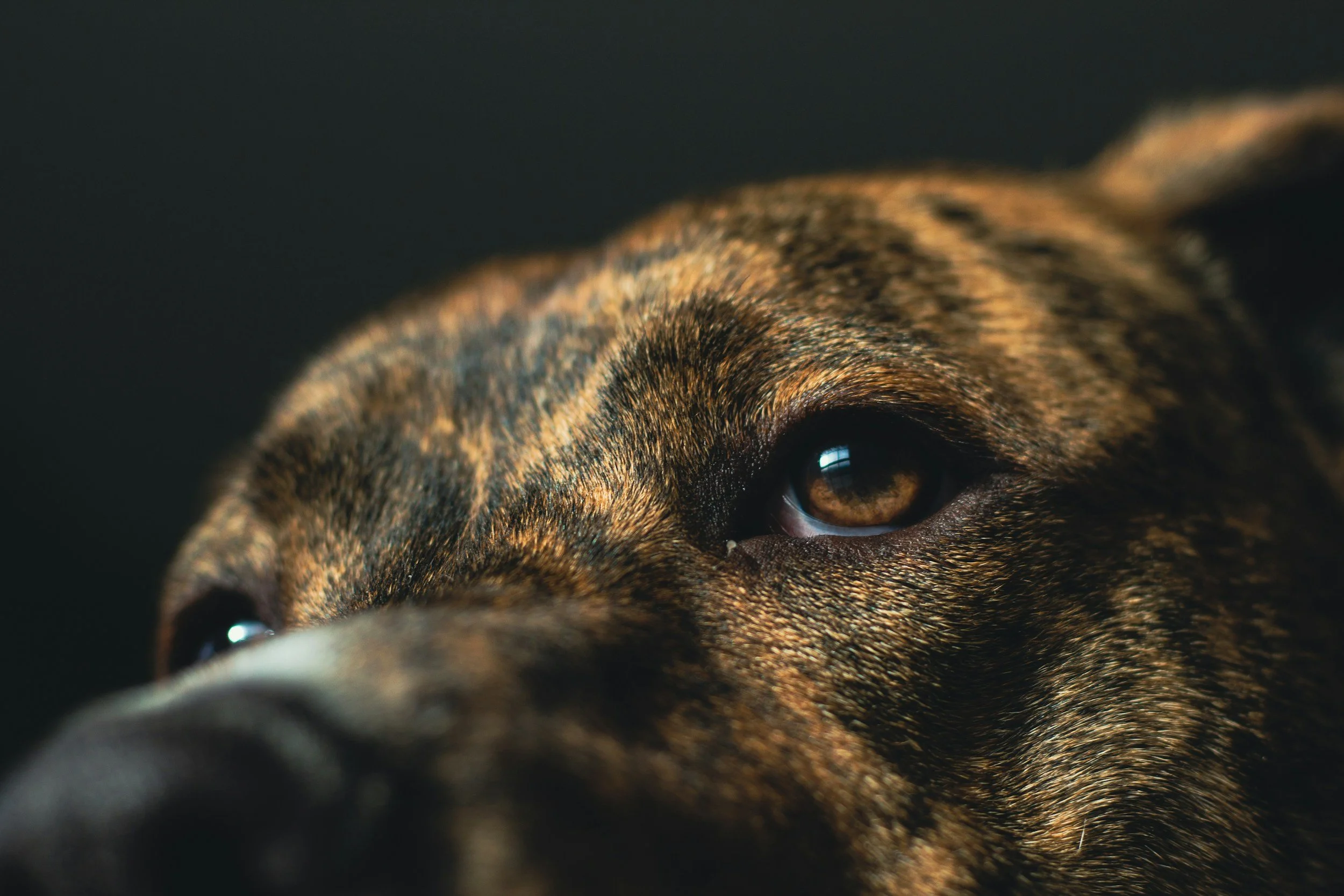
Understanding the world from your dog's point of view
Your dog is talking to you. Right now, in this moment - whether they're stretched across the sofa, pressed against your leg, or glancing sideways at something outside the window - they are communicating. They are expressing needs, feelings, uncertainties, and joys in a language that is rich, nuanced, and entirely their own. The problem isn't that dogs are hard to understand. It's that we've never been taught to listen.
This guide is my attempt to change that. Not as a training manual or a behaviour correction resource, but as a genuine invitation to see the world as your dog sees it - to understand how they experience smell, sight, touch, rest, fear, and joy. Because once you start to truly understand a dog, you can never go back to seeing them as 'just a pet.'
Dogs are sentient beings. They feel pain, fear, comfort, and love. They deserve to be understood - not just managed.
The Nose Knows: Living in a World of Scent
If we were to redesign the human brain to match a dog's, we would need to expand the area dedicated to smell by a factor of roughly forty. A dog's nose contains up to 300 million olfactory receptors - compared to around 6 million in ours. The part of their brain that analyses scent is, proportionally, forty times larger than our own. What does this mean in practice? When you walk into a room and smell coffee, your dog smells the specific beans, the water, the cup it was poured into, and the person who made it. When they sniff a lamppost, they're reading a full social bulletin board - which dogs passed by, when, whether they were stressed or relaxed, male or female, young or old.
The Walk is the Sniff
This is one of the most important things any dog owner can understand: the walk is not primarily about physical exercise. It is about mental stimulation, communication, and decompression. When a dog stops to sniff a patch of grass for two full minutes, they are not being awkward or difficult. They are reading the day's news. They are processing their environment. For a dog that spends much of its time at home, those sniff stops are genuinely important for their wellbeing.
Yanking a dog away mid-sniff is the equivalent of someone snatching your phone out of your hand mid-sentence. It is frustrating, disorienting, and over time, deeply demoralising.
A 'sniff walk' - where the dog leads and sets the pace, choosing what to investigate - has been shown to reduce stress hormones and improve mood more effectively than a brisk structured walk of the same length. The next time you feel the urge to pull your dog away from something they're engrossed in, try giving them thirty more seconds. Watch what happens to their whole body when you do. Of course, safety and road awareness matter. But wherever possible, let them sniff. It is one of the greatest gifts you can give them.
Seeing the World Through Dog Eyes
Dogs are not colourblind in the way many people believe. They don't see in black and white. Their colour vision is similar to that of a human with red-green colour blindness - meaning they see the world primarily in shades of blue, yellow, and grey. Reds and greens appear as muted, washed-out tones. But where dogs lack in colour range, they more than compensate in other ways.
Motion and Peripheral Vision: Dogs are extraordinarily sensitive to motion. Their eyes are positioned further to the sides of their head than ours, giving them a much wider field of view - up to 270 degrees in some breeds, compared to around 180 degrees for humans. This makes them brilliant at detecting movement at the edge of their vision, a holdover from their ancestry as hunters and prey animals alike. This is worth remembering when a dog reacts to something you simply didn't see - a distant cyclist, a leaf skittering across the road, a person a hundred metres away who moved suddenly. They're not being reactive without reason. They genuinely saw something you didn't.
Low-Light Vision: Dogs can see significantly better than us in low light. They have a reflective layer behind the retina called the tapetum lucidum - which is what causes that eerie eye-shine in photographs. This allows them to make better use of available light, meaning dusk and dawn are prime time for a dog's senses.
Close-Up Focus: Interestingly, dogs are slightly long-sighted compared to humans. They're not as good at focusing on objects that are very close up. This is one reason why a dog will sometimes sniff something they could easily see - their nose gives them more detail at close range than their eyes do.
Ears: The Mood Antenna
A dog's ears are one of their most expressive features - and one of the first things an experienced dog handler looks at when assessing how a dog is feeling.
What the Ears Are Saying
Ears held naturally or slightly forward typically indicate a relaxed, alert, and engaged dog. They're interested in what's happening around them but not alarmed.
Ears pricked sharply forward signal intense focus or excitement. The dog has locked on to something - a sound, a smell, a movement. This is high arousal, which isn't necessarily negative, but warrants attention.
Ears pinned flat against the head are one of the clearest signs of fear, submission, or significant discomfort. Combined with a lowered body and tucked tail, this is a dog telling you in no uncertain terms that they are frightened or overwhelmed.
Ears pulled back slightly, with a soft expression and relaxed mouth, is often a sign of appeasement or affection - the ears-back look many dogs give when greeting someone they love.
One ear forward, one back can indicate uncertainty - the dog is processing competing stimuli, or isn't quite sure how to feel about a situation.
Breed affects ear shape enormously - floppy-eared breeds like Spaniels and Basset Hounds have less visible ear movement than Huskies or German Shepherds. But the muscles at the base of the ear still shift, and over time you'll learn to read your own dog's subtle cues.
The Tale of the Tail
Few pieces of dog body language are more misunderstood than the tail. 'A wagging tail means a happy dog' is one of the most persistent myths in pet ownership - and it can, in some situations, be genuinely dangerous.
It's Not Whether They're Wagging, It's How: A broad, loose, full-body wag - where the whole back end swings rhythmically - is a reliable sign of joy and enthusiasm. This is the wag most people picture, and it usually does mean the dog is pleased to see you. But a tail held high and wagging in tight, rapid, stiff movements tells a very different story. This is a dog that is highly aroused, alert, and potentially on the edge of aggression. The movement looks like excitement, but the tension throughout the body tells the real tale. A low, slow wag - almost tentative - can signal anxiety or uncertainty. The dog is cautiously trying to communicate, unsure of the social situation.
The Tail Tuck: A tail tucked firmly between the legs is one of the most obvious signs of fear or submission in the canine vocabulary. It's not stubbornness. It's not naughtiness. It is a dog saying, as clearly as they possibly can: I am scared. Partial tail tucking - where the tail is lowered but not fully between the legs - indicates lower-level anxiety or stress. When you see this, take notice. Something in the environment is bothering your dog.
Tail Height as a Baseline: Every breed carries their tail differently - Greyhounds carry theirs low naturally, while Huskies carry theirs curled high. Learn your own dog's 'neutral' tail position so you can spot when it shifts.
Reading the Whole Body: Stress Signals and Calming Signals
Dogs don't communicate in single isolated gestures. They communicate in full sentences, written across their entire body simultaneously. To understand what a dog is really telling you, you need to take in the whole picture.
Stress Signals: Stress signals are the things dogs do when they're anxious, uncomfortable, or overwhelmed. They're often subtle enough to be missed entirely - until they escalate into something harder to ignore. Watch for: yawning when not tired, lip licking without food being present, excessive blinking or squinting, shaking off as if wet when they're not, panting without heat or exercise, sudden scratching or sniffing at the ground when the dog seemed engaged a moment before. That last one - suddenly sniffing the ground or scratching - is particularly important. It's called a displacement behaviour. The dog feels uncomfortable and redirects their attention to something neutral as a way of coping. It's not random. It's a stress response.
Calming Signals: Norwegian dog trainer Turid Rugaas identified a set of behaviours that dogs use to communicate peaceful intent - both to other dogs and to humans. These include turning the head away, averting the eyes, yawning, moving in a curve rather than straight line when approaching, sitting or lying down, and moving slowly. When a dog does these things in your presence, they may be telling you that they find the interaction intense and are trying to de-escalate. It's worth pausing and giving them space when you notice these signals.
Cowering and Hiding: A dog that regularly cowers at sudden movements, hides behind furniture, or flattens to the floor when approached is not being dramatic or attention-seeking. They are experiencing genuine fear. Cowering is a hard thing to witness in a dog you love, because it raises uncomfortable questions. Sometimes it reflects a difficult history before the dog came to you. Sometimes it develops gradually in response to an environment that's too loud, too unpredictable, or too overwhelming. And occasionally, it can be a response to something happening within the home that the dog finds frightening - even unintentionally. A dog that hides - under beds, behind sofas, in corners - is choosing the safest place they can find. Forcing them out to 'face their fears' rarely helps and often makes things significantly worse. Instead, let them decompress on their own terms. Make the hiding spot comfortable. Let the dog come out when they're ready.
A dog that hides is asking for safety and patience. Give them both.
How a Dog Sleeps Tells You How Safe They Feel
Dogs sleep a lot - adults typically between twelve and fourteen hours a day, puppies and seniors even more. But how a dog sleeps is just as telling as how much they sleep.
The Sleeping Positions
The Superman - belly flat, legs stretched out front and back is common in puppies and highly energetic dogs. It allows them to spring up instantly. These dogs are often ready to go at a moment's notice even in sleep.
The Donut - curled tightly, nose to tail is a protective position. It conserves warmth and protects the vulnerable belly and organs. In the wild, this is the safe sleep position. A dog that always sleeps this way may be cold, but may also be a dog that doesn't yet feel fully secure.
The Side Sleeper - fully on their side, legs loose and extended is the deep sleep position. A dog sleeping like this is completely relaxed, unconcerned about their surroundings, and genuinely at ease. It is one of the most reassuring things to see in a dog.
The Back Roller - legs in the air, belly fully exposed takes things even further. The belly is the most vulnerable part of any animal. A dog that sleeps on their back is saying: I feel so safe here that I don't even need to protect myself. This is the sleeping position of a dog that truly trusts their environment.
Where your dog chooses to sleep also matters. A dog that seeks out closeness against your legs, touching the sofa, near the bedroom door is a social sleeper drawing comfort from proximity. A dog that consistently retreats to the furthest, quietest corner to sleep may be seeking peace from a home that feels overwhelming.
Dogs and Children: What Every Parent Must Understand
Dogs and children can have the most extraordinary, life-shaping bonds. Growing up alongside a dog teaches empathy, responsibility, and unconditional love in ways that are genuinely difficult to replicate. But those bonds require something from the adults in the room: education, supervision, and the willingness to advocate for the dog. Because here is the hard truth: most dog bites involving children happen with the family dog, in the family home, with an adult nearby. They are not random acts of aggression from dangerous animals. They are the final communication of a dog who has been trying to say 'stop' for a long time - and wasn't listened to.
We are the dog's advocate. They cannot speak up for themselves. When a dog is stressed, frightened, or in pain, their last resort may be to snap. It is never the first thing they tried.
What Children Must Never Do
Pulling a dog's tail. This causes pain, surprise, and fear. Even the most placid dog has a threshold. Tail pulling especially from behind, where the dog cannot anticipate it is genuinely painful and deeply unsettling. It is not playing. It is not funny. It must be stopped, every time.
Falling or climbing on a dog. Children often see dogs as soft furniture, and to a small child the instinct to flop down on a warm, fluffy creature is entirely natural. But for the dog it can be frightening, painful, and suffocating. A dog that is crushed repeatedly may eventually respond with the only tool they have left.
Hugging around the neck. Primates hug. Dogs do not. What feels like affection to a child reads very differently to a dog, many find it deeply uncomfortable, even threatening. Watch a dog during a child's hug: if the ears go back, the head turns away, the body stiffens, or the dog licks their lips they are not enjoying it. They are tolerating it, there is a difference.
Approaching a dog while they're eating or sleeping. A dog that is eating needs to eat undisturbed. A dog that is sleeping should not be startled awake. These are moments when even the gentlest dogs may react instinctively. Teach children that the dog's bowl and bed are private spaces.
What Parents Must Model
Children learn almost everything about how to treat animals from watching the adults around them. If a parent thinks a dog flinching is funny, the child will think it is funny. If a parent dismisses a dog's growl as 'it was nothing,' the child learns that growling doesn't mean anything. Teach children to ask before approaching any dog - including their own. Teach them to approach from the side rather than head-on, to offer a hand to sniff before reaching for the head, and to always, always, respect a dog that walks away. Walking away is communication. It means: I need space right now. A child who follows a dog that has walked away has ignored that communication. An adult who allows it has failed to translate.
Think about it this way: we protect children from harm constantly - car seats, stair gates, protective gear. We do this not because children are bad, but because they are learning, and learning takes time. Protecting a dog from unintentional harm requires the same mindset. The dog didn't ask to be there. They deserve to feel safe in their own home.
On the Lead: The Walk From the Dog's Perspective
Imagine being taken somewhere every day - somewhere full of extraordinary, overwhelming information - and being hurried past it all on a short tether with no say in where you go or how long you stay. Imagine being told to walk in a straight line when everything in your biology is pulling you sideways. That is what many dogs experience on a lead.
The Sniff Stop is Not a Problem: When your dog plants all four feet and refuses to move until they've finished processing whatever scent has stopped them in their tracks, they are not being difficult. They are doing the thing that walking is, for them, fundamentally about. The smell is important. More important, in that moment, than your schedule. We understand this can feel frustrating. Walks happen within the constraints of real life - there are fifteen minutes before work, a school run to get back for, rain coming in. All of that is real. But even within those constraints, there is usually space to give a dog ten more seconds at the thing that captivated them. And if you can carve out just one walk a week that is genuinely led by the dog - going where they want to go, stopping when they want to stop, sniffing everything they want to sniff - the difference in their demeanour will be noticeable. They will come home genuinely tired in a way that physical exercise alone doesn't always achieve. Mental tiredness, for a dog, is deeply satisfying.
Reactive Dogs on the Lead: A dog that lunges, barks, or pulls intensely towards other dogs or people on the lead is often described as aggressive. Frequently, they are not. Frequently, they are frustrated or frightened - and the lead itself is part of the problem. Being on a lead takes away a dog's ability to use their normal social toolkit. They can't approach in a curve. They can't choose their distance. They can't sniff and move on naturally. When another dog approaches head-on, which is deeply rude in dog language, the lead-reactive dog has no option to retreat. Tension down the lead transmits directly into their body. All of that compounds. If your dog is reactive on the lead, they need understanding and often professional support - not punishment. Yanking the lead, shouting, or using aversive equipment typically increases anxiety and makes reactivity worse over time.
What Walks Are Really For: Physical exercise is important. But for a dog, the walk is also about: mental stimulation through sniffing and environmental exposure, social information gathering, decompression from time spent alone, and connection with you. A walk where the dog sniffs freely, sets some of the pace, and feels secure and unpressured does more for their wellbeing than a fast-paced march of the same distance. Slow down. Follow their nose occasionally. Be present with them rather than lost in your phone. The walk is one of the few times a dog has genuine agency over their environment. That matters more than we often realise.
More Than a Dog
Dogs did not choose to live alongside us. We brought them into our world - our homes, our routines, our noise, our unpredictability and they adapted, with extraordinary loyalty, because they had no other choice. In return, the least we owe them is understanding.
Not perfect knowledge - there's no such thing. But curiosity. The willingness to stop and ask: what is this dog actually telling me right now? What does this tail position mean? Why has she started hiding when she never did before? Why does he shut down every time the children run in?
When we learn to ask these questions - and to actually sit with the answers we stop managing dogs and start truly living with them. We become advocates for animals that cannot speak for themselves. We become the people they need us to be. Dogs are sentient beings. They experience fear and joy, comfort and pain, loneliness and belonging. They deserve to be seen as such - not just in how we speak about them, but in how we treat them, every single day.
If this guide has started to shift how you see your dog, share it. Every dog deserves an owner who understands them.