Kibble, Raw, or Something In Between?
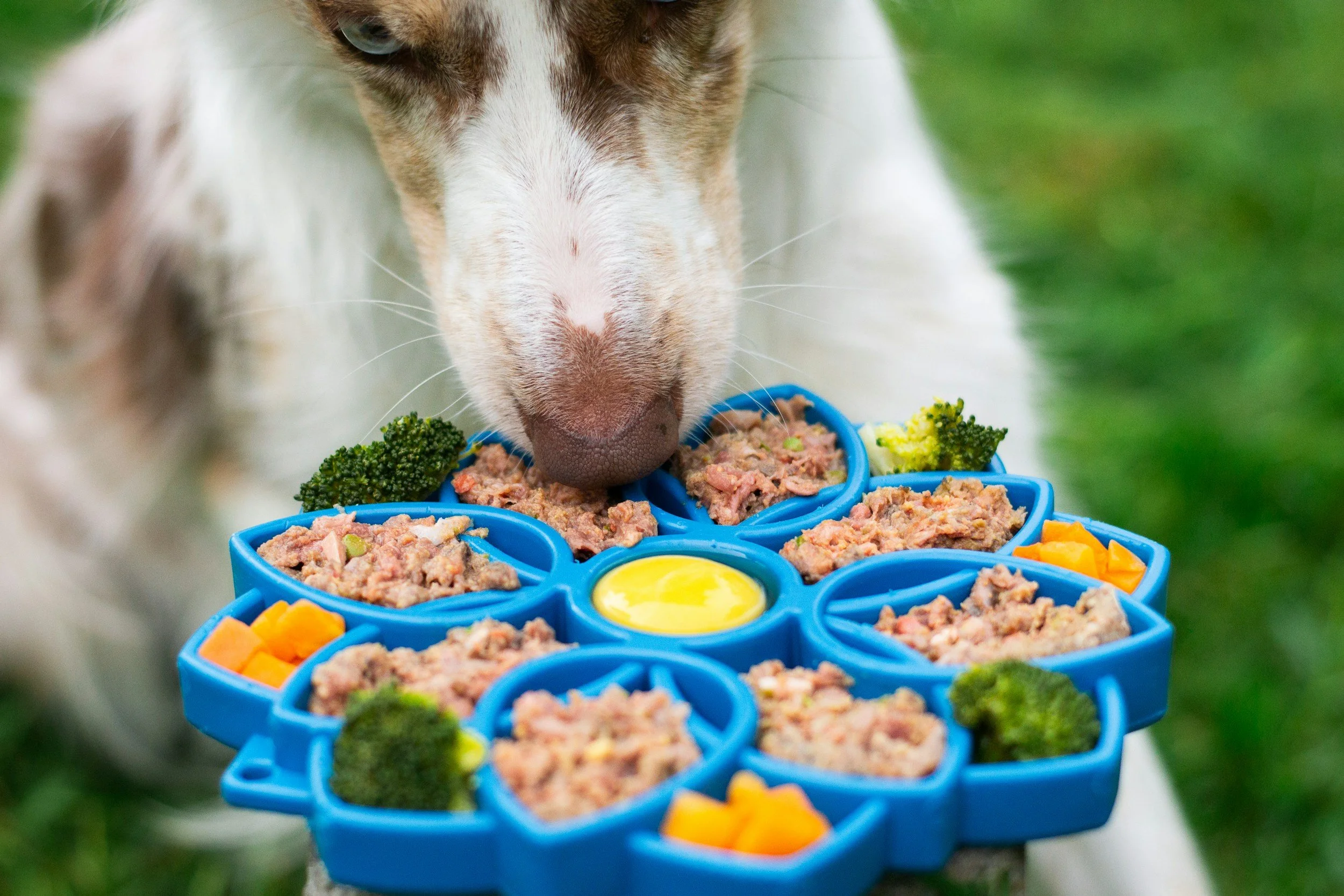
Walk into any pet shop or spend ten minutes on Google and you'll quickly find yourself confronted with a bewildering range of options. Kibble, cold pressed, air dried, freeze dried, raw, home cooked - each one comes with its own passionate advocates, its own marketing claims, and its own set of genuine advantages and limitations.
This post cuts through the noise. No agenda, no single "right answer" - just a clear explanation of what each format actually is, how it's made, and who it suits best. Because the best food for your dog isn't necessarily the most expensive or the most fashionable, it's the one that suits their individual needs, your lifestyle, and your budget, and that you can sustain consistently.
One note before we begin: if you're hoping to feed your dog organically, and it's a wonderful goal, you'll quickly discover as I have that certified organic pet food is remarkably hard to find in the UK. The few brands that exist are often expensive and not always easy to source. My practical recommendation is not to let the perfect be the enemy of the good. Choose the best quality complete food you can find and afford, then supplement with organic whole foods, vegetables, eggs, kefir, and similar additions, to bring organic nutrition into the bowl without needing a fully organic complete food.
Dry Kibble
What it is: The most widely fed format in the UK. Ingredients are blended, cooked at very high temperatures through an industrial extrusion process, shaped into nuggets, and dried until shelf-stable. A coating of fats and synthetic vitamins is sprayed on at the end.
Shelf life: 12–18 months unopened. A few weeks once open.
Genuine advantages: Convenient and easy to store, a wide range of quality levels available, generally the most affordable format, easy to measure and portion control, widely available everywhere.
Honest limitations: High-heat processing destroys natural nutrients, which must be replaced synthetically. Requires high starch content to hold its shape - most kibbles are 40–60% carbohydrate. Quality varies enormously; the majority of mainstream brands are nutritionally mediocre. Highly processed by any definition.
Best suited to: Owners who need convenience and affordability, provided a genuinely good quality kibble is chosen.
Cold Pressed Dog Food
What it is: A newer format that's gained significant popularity in the UK over the last decade. Ingredients are mixed and pressed together at low temperatures - typically no higher than around 45°C - rather than cooked at high heat. This gentler process preserves far more of the natural nutrients, enzymes and beneficial compounds in the ingredients. The result is a dense, firm pellet that looks a little like a compressed biscuit.
Shelf life: 12-18 months unopened. Once open, typically 6-8 weeks.
One of the most interesting properties of cold pressed food is that it breaks down quickly in the stomach, much faster than extruded kibble, which can sit in the digestive system for considerably longer. This makes it a particularly good option for dogs prone to bloat or digestive sensitivity.
Genuine advantages: Significantly lower processing temperatures preserve more natural nutrition. Digestibility is generally better than extruded kibble. Can be crumbled over raw food as a topper, making it an excellent "mixed feeding" option. Ingredient quality in cold pressed brands tends to be higher as a category.
Honest limitations: More expensive than standard kibble. Fewer brands available than kibble, though the market is growing. Still a processed food, just processed more gently.
Best suited to: Dogs with sensitive digestions, owners stepping up from standard kibble who aren't ready to go fully raw, or anyone who wants to mix formats. Brands like Walker & Drake, Guru, Gentle, and Tribal are well-regarded in the UK cold pressed market.
Air Dried Dog Food
What it is: Essentially a modern take on the age-old process of drying and preserving meat. Ingredients - typically high-meat recipes with vegetables and botanicals, are gently dried at low temperatures over an extended period, removing moisture while retaining far more nutritional integrity than high-heat cooking. Meat content is often 70-90% in quality brands.
Shelf life: 18–24 months unopened. A few weeks once open.
Genuine advantages: Minimal processing, closer to whole food than any cooked format. Very high meat content in quality brands. Excellent digestibility. Highly palatable. No refrigeration needed until open.
Honest limitations: Expensive, particularly given the feeding quantities required. Not all air dried foods are equal, some use lower quality ingredients at lower price points. Can be calorie-dense, so portion control matters.
Best suited to: Owners who want minimal processing and high meat content without committing to raw. Also works well as a high-value topper or mixer over kibble or cold pressed.
Freeze Dried Dog Food
What it is: Ingredients are frozen at extremely low temperatures and then have their moisture removed through a vacuum process. It's arguably the closest thing to raw food in a shelf-stable format, since no heat is used at any point. Available as complete meals, toppers, or raw meal patties and nuggets rehydrated with water before serving.
Shelf life: Up to 2 years unopened. Once open or rehydrated, treat like fresh food.
Genuine advantages: Nutritional profile closest to raw of any shelf-stable format. No heat used, so enzymes, vitamins and nutrients are largely preserved. Lightweight and easy to store. Excellent for travel or when raw feeding isn't practical.
Honest limitations: The most expensive format, often significantly so. Rehydration is required for complete meals, which adds a prep step. Not always widely available in physical shops.
Best suited to: Owners who want raw-level nutrition without the cold chain logistics, or as a high-quality topper. Also excellent as a travel option for dogs normally fed raw.
Fresh Dog Food
What it is :A newer category in the UK market, delivered chilled or frozen directly to your door, typically from brands like Different Dog, Tails, or Bella & Duke's cooked range. Human-grade ingredient, usually a high proportion of named meat alongside vegetable, are gently cooked at low temperatures, well below the extreme heat used in kibble extrusion, then portioned and packed for freshness. It sits nutritionally between home cooking and commercial kibble: properly formulated to be nutritionally complete, but cooked rather than raw.
Shelf life: Typically 10-14 days refrigerated once thawed, or several months frozen unopened. Much shorter than any of the shelf-stable formats above, since there's no drying or extreme processing involved.
Genuine advantages: Gentle cooking preserves considerably more nutritional value than high-heat extrusion. Human-grade ingredient standards in most brands. Highly palatable, often a good option for fussy eaters transitioning off poor-quality kibble. Portioned and pre-measured, which takes the guesswork out of feeding amounts. A good middle-ground option for owners drawn to raw's ingredient quality but not ready for raw's handling requirements.
Honest limitations: Among the most expensive formats available, often significantly more than raw per kilogram given the delivery model and packaging. Requires freezer or fridge space and forward planning, similar to raw. Fewer brands and recipes available compared to kibble or raw. Subscription-based delivery models can be less flexible than buying as needed.
Best suited to: Owners who want the quality and freshness benefits of a minimally processed diet without the specific handling and food safety considerations of raw, and who have the budget and fridge/freezer space to accommodate it. Also a popular stepping stone for owners moving away from kibble who aren't ready to commit to raw.
Raw Feeding (BARF and PMR)
What it is: Feeding uncooked meat, bones and organs, as close as possible to what a dog's digestive system evolved to handle. There are two main approaches:
BARF (Biologically Appropriate Raw Food): raw meat, meaty bones, organ meat, and a proportion of raw vegetables, fruit and sometimes dairy like kefir, replicating a varied, whole-food diet.
PMR (Prey Model Raw): stricter: meat, bone and organ only, in specific ratios (roughly 80% muscle meat, 10% bone, 10% organ), with no plant matter, modelled closely on what a wild canid would eat.
In practice, most raw feeders in the UK use commercially prepared raw, frozen blocks, patties or minces from brands like Cotswold, Nutriment, Bella and Duke and others, formulated to be nutritionally complete.
Genuine advantages: Highly digestible. Typically high in protein and natural fats, low in carbohydrates. Associated with improvements in coat condition, dental health, energy and stool quality in many dogs. No synthetic additives, preservatives or fillers in quality complete raw foods. Can incorporate organic meat and vegetables easily.
Honest limitations: Requires freezer space and forward planning. More expensive than kibble, though cheaper than freeze dried. Raw meat carries a well-documented risk of bacterial contamination, including Salmonella and Listeria, at meaningfully higher rates than cooked or dry food - this is consistently backed by independent testing, not just a theoretical concern. For this reason, vets and public health bodies advise against raw feeding in households with immunocompromised individuals, infants, the elderly, or pregnant people, and it's not suitable for dogs who are themselves immunocompromised - those undergoing chemotherapy, on long-term steroids, or with certain health conditions. Worth knowing: actual reported cases of illness passing from raw pet food to a human family member appear to be uncommon in practice, even among raw-feeding households, provided good hygiene is maintained. Choosing a commercial raw brand that uses a validated pathogen-reduction step, such as high-pressure processing (HPP), meaningfully reduces this risk compared to untreated raw meat, and is worth asking about when choosing a raw brand. Requires careful attention to balance if feeding DIY rather than a complete commercial raw food.
A crucial distinction - complete vs complementary: always check whether a raw food is labelled complete (formulated to meet all nutritional needs on its own) or complementary (meant to be fed alongside other foods). Feeding only a complementary raw as the sole diet will result in nutritional gaps over time.
Best suited to: Healthy dogs in households without significant vulnerability concerns, with owners willing to manage the practicalities of frozen food. One of the most nutritionally sound options available when done correctly.
Home Cooked Dog Food
What it is: Preparing meals from scratch using whole ingredients - meat, vegetables, grains or pulses if used, and appropriate supplementation. When done well, it can be one of the most nourishing ways to feed a dog. When done poorly, it's one of the most risky.
Genuine advantages: Complete control over every ingredient - ideal for dogs with multiple allergies or intolerances. Can use organic, human-grade ingredients throughout. No processing whatsoever. Deeply satisfying for owners who want full transparency about what their dog eats.
Honest limitations: Achieving genuine nutritional balance is genuinely difficult without expert guidance. Time-consuming. Easy to inadvertently create deficiencies, particularly in calcium, zinc and certain vitamins, over time. Cooking destroys some nutrients that would be present in a raw equivalent.
Best suited to: Owners with the time, commitment and access to proper nutritional guidance. If you're considering home cooking as your dog's primary diet, working with a qualified canine nutritionist to formulate a balanced recipe is strongly recommended - not optional. Cam the Dog Nutritionist's Ultimate Homemade Dog & Puppy Food Recipe Book is an excellent starting point, covering raw and cooked recipes for all life stages with simple, affordable ingredients. Rodney Habib and Dr Karen Becker's The Forever Dog Life is another excellent resource her, it includes dozens of treat and meal recipes alongside practical guidance for implementing a longevity-focused approach to feeding, and pairs well with Cam's book if you want a broader philosophy behind the recipes as well as the recipes themselves.
Comparing the Formats at a Glance
Processing level (lowest to highest): Raw → Freeze dried → Fresh (lightly cooked) → Air dried → Cold pressed → Kibble
Cost (lowest to highest): Kibble → Cold pressed → Raw → Air dried → Freeze dried → Fresh (lightly cooked)
Convenience (highest to lowest): Kibble → Air dried → Freeze dried → Cold pressed → Fresh (lightly cooked) → Raw → Home cooked
Nutritional integrity (highest to lowest): Home cooked (done well) / Raw → Freeze dried → Fresh (lightly cooked) → Air dried → Cold pressed → Kibble
A note on cost: these rankings reflect general tendencies, but actual pricing varies considerably by brand, and freeze dried in particular can sometimes come out more expensive than fresh, depending on the specific products you're comparing. Rather than relying on format alone, it's always worth comparing the actual cost per kilogram or per day of feeding when weighing up specific products, since pricing within any single format can vary as much as it does between formats.
Checking Any Product Before You Buy
Whichever format you're leaning towards, the next step is the same: check the actual product, not just the category. Quality varies enormously within every format above, there are excellent and poor examples of kibble, just as there are excellent and poor examples of raw.
All About Dog Food is an independent, UK-based site that rates and reviews thousands of dog foods across every format on this list, kibble, cold pressed, air dried, freeze dried, raw and more, purely on ingredient quality, nutritional composition and labelling transparency, with no brand affiliations. It's completely free, and it's the single most useful tool I'd recommend bookmarking before choosing any specific product. I've covered how to use it in detail in [my post on reading dog food labels] - well worth a read if you want to get genuinely confident comparing products yourself.
No single format is right for every dog or every household. The most important thing is making an informed choice, and understanding that wherever you start, there are always ways to improve what goes in the bowl without overhauling everything overnight.