Dog Dental Health: What Actually Works
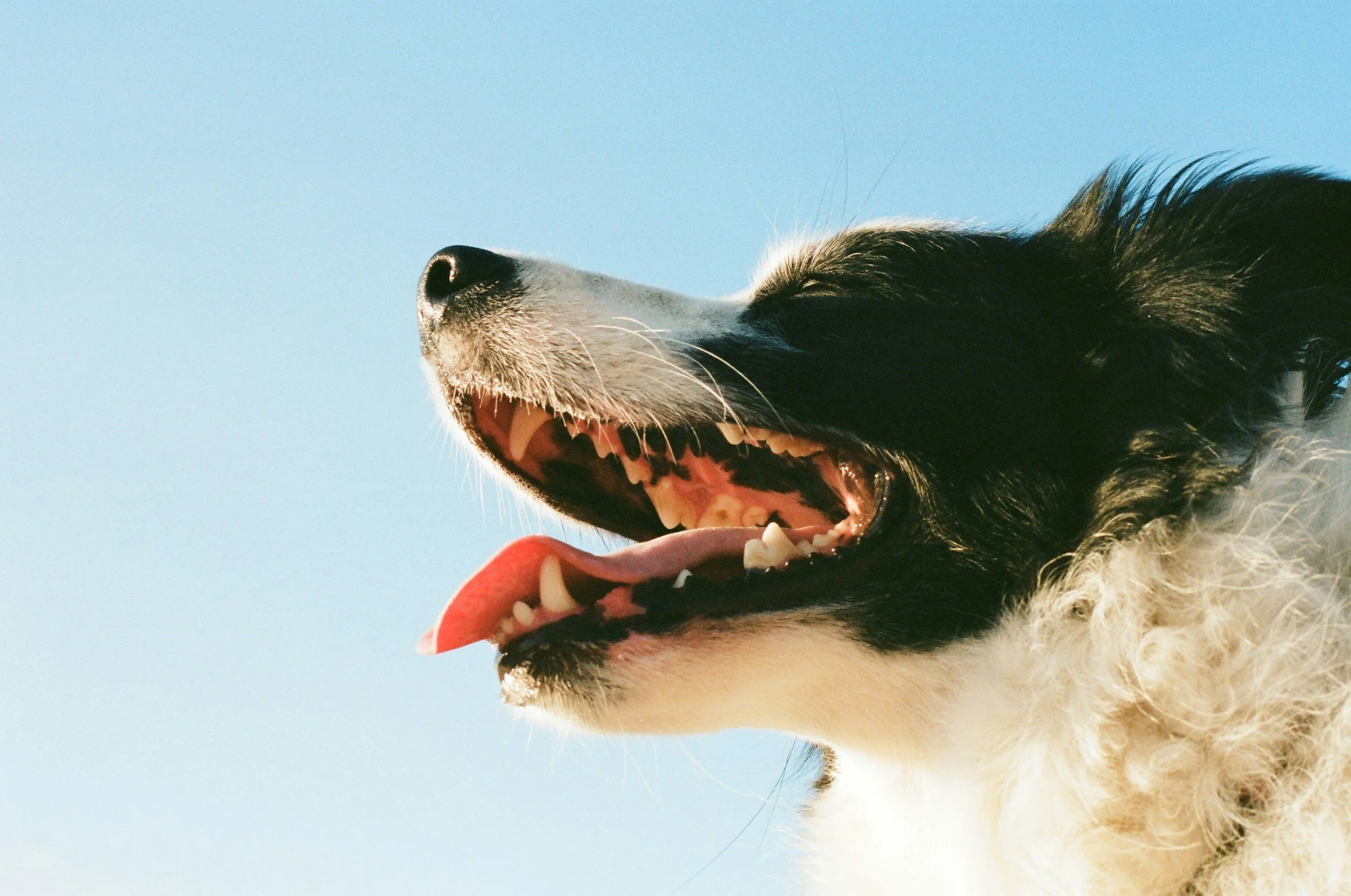
Dental health is one of the most overlooked aspects of dog care, and also one of the most consequential. It doesn't just affect your dog's mouth, poor dental health is linked to heart, kidney and liver disease, and the bacteria from an infected mouth can enter the bloodstream and affect organs throughout the body. I touched on this briefly in my post on common grooming mistakes, but it genuinely deserves a full, proper look of its own.
Why Dental Health Matters So Much
More than 80% of dogs over the age of three have some degree of periodontal disease, a figure that surprises most owners, largely because the early stages are genuinely difficult to spot without specifically looking for them. Periodontal disease begins with plaque, a soft, sticky film of bacteria that forms on the teeth within hours of eating. Left undisturbed, plaque hardens into tartar within a matter of days, and tartar cannot be removed by brushing alone, it requires either professional intervention or, in early stages, can sometimes be softened and managed with the right approach. Beneath the visible tartar, bacteria works its way below the gumline, causing inflammation, then infection, then, eventually, the breakdown of the structures holding the tooth in place.
This isn't just a cosmetic or "bad breath" issue. Established periodontal disease is genuinely painful, dogs are simply very good at masking pain in the mouth, (and pain in general). And the bacterial load from an infected mouth doesn't stay contained, it circulates through the bloodstream and has been linked to increased strain on the heart, kidneys and liver over time. Dental health is whole-body health, not a separate category.
Recognising the Signs
Most owners don't notice dental problems until they're fairly advanced, partly because the changes happen gradually and partly because few of us are in the habit of regularly looking inside our dog's mouth. Signs worth watching for:
Bad breath beyond normal "dog breath" - a sudden or significant change in odour, particularly anything sour or unpleasant, is often one of the earliest noticeable signs.
Visible tartar - a yellowish-brown, hardened buildup along the gumline, most easily seen on the back teeth.
Red, swollen or bleeding gums - healthy gums should be a consistent pink, not red or inflamed, and shouldn't bleed with gentle contact.
Reluctance to chew or chewing on one side - a dog favouring one side of their mouth, dropping food, or showing less enthusiasm for chews and hard food than usual can be quietly signalling dental discomfort.
Pawing at the mouth or face - a fairly direct sign of oral discomfort worth taking seriously.
Loose or visibly damaged teeth - by the time a tooth is visibly loose, the underlying disease is usually well established.
A general change in eating habits or mood - some dogs become quieter or more withdrawn with ongoing dental pain, a change that's easy to attribute to something else entirely.
If you notice any of these, particularly bleeding gums, visible tartar, or a reluctance to eat, it's worth a proper veterinary dental check rather than waiting to see if it resolves on its own.
Heavy, established tartar in short-muzzled breeds and older dogs - worth a specific mention, since this presents differently from the signs above. In brachycephalic breeds, Shih Tzus, Pugs, French Bulldogs and similar, crowded teeth in a shortened jaw create more surfaces for plaque to collect and less natural self-cleaning action, meaning heavy tartar buildup can become established relatively young, and often looks strikingly different from the mouth of a longer-muzzled breed with the same lack of dental care. Similarly, in older dogs whose dental care has been minimal or inconsistent over the years, tartar can build into thick, solid, yellow-brown deposits covering much of the tooth surface, sometimes so extensive that the underlying tooth is barely visible. If your dog's teeth look like this, this isn't a brushing problem to solve at home, it needs a proper veterinary dental assessment, and very likely a professional clean under anaesthetic, since brushing alone cannot remove tartar at this stage, established buildup like this can only be removed through scaling.
Brushing: The Single Most Effective Thing You Can Do
Daily brushing is, genuinely, the gold standard for preventing dental disease, more effective than any chew, additive or dental diet on its own. It physically disrupts plaque before it has the chance to harden into tartar, which is precisely why frequency matters more than almost anything else.
How often: Daily is ideal. Two to three times a week is a reasonable, realistic minimum for most owners and still provides meaningful benefit, though the gap between daily and less frequent brushing in terms of actual disease prevention is significant, plaque can begin hardening into tartar within as little as 24 to 72 hours.
What to use: Always a toothbrush and toothpaste specifically made for dogs. Human toothpaste is genuinely dangerous, most contains xylitol, an artificial sweetener that's highly toxic to dogs, alongside fluoride at concentrations not intended for swallowing, which dogs will inevitably do since they can't spit and rinse. I use Dorwest Roast Dinner Toothpaste, which my own dogs genuinely look forward to rather than tolerate, a flavour they're keen to have applied makes an enormous difference to how manageable the whole process is.
Choosing a toothbrush: A dual-ended brush, with a smaller head at one end for back teeth and a larger head at the other for front teeth and general brushing, tends to work better than a single fixed-size brush, since a dog's mouth has such variation in space and tooth size across its length. I use a Petsmile dual-ended toothbrush, which covers this well, alongside a soft enough bristle to be comfortable against the gumline without causing irritation. A finger brush, which fits over your fingertip, can also be a gentler starting point for a dog who isn't yet used to a traditional brush, useful during the early stages of building the habit before moving on to a proper toothbrush.
Building the habit: If your dog isn't used to having their teeth brushed, this needs to be introduced gradually and positively, the same principle covered in more depth in my post on a puppy's first groom applies equally to adult dogs starting from scratch. Begin simply with lifting the lip and touching the teeth and gums, building toward brief brushing over several sessions, always paired with calm praise and reward, never forced.
When Brushing Isn't Happening, or Isn't Enough
Not every owner manages daily brushing, and that's a genuine, common reality worth being honest about. There are supportive options worth knowing about, though none replace brushing entirely.
Probiotic dental sprays: For dogs who won't tolerate brushing, LUCAA+ Probiotic Dental Care Spray from Ingenious Probiotics is a no-brush alternative I rate. Rather than physically scrubbing plaque away, it works by introducing beneficial bacteria directly onto the teeth and gums, which compete with and help crowd out the harmful bacteria responsible for plaque formation and bad breath, a similar principle to how a healthy gut microbiome helps keep harmful gut bacteria in check. It's genuinely simple to use, sprayed directly onto the teeth and gumline daily, with no rinsing or specific technique required, which makes it a realistic option for dogs who find a toothbrush too invasive or who are still building tolerance for handling. It's not a substitute for brushing where brushing is genuinely possible, since it doesn't provide the same mechanical disruption of established plaque, but it's a meaningfully better option than doing nothing, and a useful bridge for dogs mid-way through building comfort with a full brushing routine.
Seaweed-based dental powders: One of the most commonly recommended dental products on the market, and worth covering properly. Products like Canident, a blend of three Irish seaweeds with no added extras, use a specific type of seaweed sprinkled daily over food. Unlike a chew or brush, it works systemically rather than through direct contact, the seaweed's compounds are absorbed and secreted through saliva, making the tooth surface less hospitable to plaque bacteria and gradually softening existing tartar over several weeks. This category has genuine evidence behind it more broadly, seaweed-based dental supplements have shown meaningful reductions in plaque, tartar and gum bleeding in clinical trials after around a month of daily use. It's not a replacement for brushing, and the effect size is modest rather than dramatic, but it's a legitimate, well-evidenced option, particularly for dogs who won't tolerate brushing at all. One practical note: if your dog is already having a seaweed or kelp-containing multivitamin topper, check the label before adding a dedicated seaweed dental product on top, you may already be getting some of this benefit without realising it. Dogs with thyroid conditions should only use seaweed-based products under veterinary guidance, given the naturally occurring iodine content.
Raw meaty bones: Covered in more depth in my post on understanding raw feeding, appropriately sized raw meaty bones, given under supervision, provide genuine mechanical cleaning action through gnawing, one of the reasons dental health is often noticeably better in dogs fed a raw diet that includes bone content.
Other options worth knowing about: The dental care market has grown considerably, and a few other categories are worth a brief mention. Dental gels, applied directly to the gumline rather than brushed, offer a middle ground between a full brush and a chew for dogs who tolerate some handling but not a toothbrush specifically, I use Pet Wellbeing Healthy Gums gel in this way alongside brushing. Water additives work on a different principle to seaweed powder, delivering their active ingredients only through direct contact when your dog drinks, rather than systemically through saliva, generally a gentler, more limited effect than a seaweed supplement, but a reasonable low-effort addition for some dogs. Whatever combination you land on, more than one approach used together, brushing plus a chew, or a seaweed powder alongside brushing, tends to outperform any single method used alone.
Why So Many Dental Chews on the Market Aren't Worth Buying
Walk down the dental chew aisle of any supermarket or pet shop and you'll find dozens of products, all claiming to clean teeth, freshen breath and support gum health. The uncomfortable truth is that "dental chew" as a category label tells you almost nothing about what's actually in the product, and a significant number of mainstream options contain ingredients that have no business being fed to a dog daily, ironically, in the name of dental health.
Sodium tripolyphosphate (STPP), the ingredient doing the actual "cleaning" in many mainstream chews: This is worth understanding specifically, since it's the active mechanism behind some of the best-selling dental chews on UK supermarket shelves. STPP works by chemically binding to minerals in saliva to slow tartar formation, but it's also used industrially as a preservative and thickening agent, and appears in household cleaning products, water softeners and tanning products. It's genuinely listed on the ingredient panel of the products that use it, this isn't a hidden or undisclosed additive, it's simply one most owners have never heard of and wouldn't recognise without looking it up. Research has raised genuine concern about its effects with regular exposure, including reduced iron content in the bone, liver and spleen in animal studies. It's worth knowing exactly what's behind the "clinically proven" claims on some of the most widely bought dental chews and checking the ingredients panel yourself rather than assuming a product is doing what its marketing implies.
Artificial colours, with no functional purpose whatsoever: Some dental chews are dyed bright green or blue, presumably to visually signal "fresh" or "minty" to the human buyer, since dogs have no meaningful colour perception in this context. Artificial dye serves no dental function at all, it exists purely for marketing, and it's an entirely unnecessary additive in a product a dog eats regularly.
Synthetic "flavours" that mask rather than support: Vague labelling like "poultry flavour" or "natural flavour" on a dental product is often a synthetic compound designed purely to make the product palatable, not an ingredient contributing anything to dental health. This is the same labelling vagueness worth watching for on food, covered in my post on reading dog food labels, and the same scrutiny applies here.
Preservatives worth specifically avoiding: BHA, BHT, TBHQ and ethoxyquin all show up in some dental chew formulations, the same synthetic preservatives worth avoiding in food generally, BHA and BHT in particular are classified as possible carcinogens. Propylene glycol and propyl gallate are two further additives worth watching for, associated respectively with a specific type of blood disorder and disruption to normal hormone function in research, generally more of a concern with regular, repeated exposure than the odd occasional treat.
High-glucose starches, actively working against the product's own purpose: Some dental chews are bulked out with corn or wheat starch, ingredients that break down into sugars that feed the exact bacteria responsible for plaque formation in the first place. A dental product containing ingredients that actively promote plaque is, at best, working against itself.
What to look for instead: A short, genuinely recognisable ingredient list is the single best filter, if you can't picture what most of the ingredients actually are, that's worth treating as a red flag, the same principle covered in my post on reading dog food labels. Look for natural abrasive texture doing the actual cleaning work, rather than a chemical additive, genuine, named herbs like parsley or fennel for breath freshening rather than artificial flavour, and no added colour of any kind. A dental chew with five or six recognisable ingredients is doing a fundamentally different job to one with a long list of additives, however similar the marketing claims on the front of the packet might look.
Choosing a chew that lasts, not one gone in thirty seconds: Worth considering separately from ingredient quality is how long a chew actually keeps a dog engaged, since a stick that's devoured in a minute or two provides almost no meaningful mechanical cleaning benefit, whatever's printed on the packet, and simply becomes an extra hit of unnecessary calories and ingredients. Collagen sticks and rolls, made from the inner layer of beef hide (the corium), are worth knowing about here, single-ingredient, genuinely long-lasting, and considerably easier to digest and generally safer than traditional rawhide. The extended, gradual chewing action provides sustained mechanical friction against the teeth over a much longer period than a fast-consumed stick ever could, alongside genuine additional benefit to joints, skin and coat from the collagen itself. As with any chew, choose a size genuinely appropriate to your dog and always supervise, particularly toward the end of a session once the piece has worn down small enough to pose a choking risk.
A Specific Note on Rawhide
Rawhide deserves its own mention, separate from the general chew guidance above, since it's still one of the most widely sold chews on the market and carries risks worth understanding properly before choosing it.
How it's actually made: Rawhide is produced from the inner layer of animal hide, cleaned, treated and processed, often using chemicals including bleach or hydrogen peroxide to whiten it, and sometimes formaldehyde or chromium salts as part of the preservation process. Testing has, in some cases, found traces of heavy metals including lead and arsenic in rawhide products. This is a genuinely industrial process, whatever the finished product's marketing might suggest about it being a "natural" chew.
The bigger risk, though, is physical rather than chemical: Choking and intestinal blockage are, by a significant margin, the most common and most serious risk associated with rawhide, considerably more common than any issue from the chemical processing itself. Dogs, particularly strong or determined chewers, can break off large pieces and swallow them largely whole, since rawhide softens and becomes stringy as it's chewed, and dogs lack the enzymes to properly digest it. A swallowed piece can lodge in the oesophagus or further down the digestive tract, sometimes requiring emergency surgery to remove.
My honest view: given the genuine availability of safer, equally long-lasting natural alternatives, collagen chews, appropriately sized natural chews, or raw meaty bones for dogs on a raw diet, I don't feed or recommend rawhide. If you do choose to offer it despite these concerns, never leave a dog unsupervised with it, and remove and discard it once it's been chewed down small enough to be swallowed whole, that's the point at which the real danger begins.
A genuinely good chew is still just one part of the picture: Even the cleanest, most natural dental chew doesn't clean below the gumline, where periodontal disease actually causes the most damage, and chewing alone won't compensate for a complete absence of brushing. Think of a good quality chew as a genuinely useful supporting tool alongside brushing, not a replacement for it, the same principle that applies to every other supportive option covered in this post.
Diet's Role in Dental Health
Diet genuinely affects dental health, though not always in the way owners assume.
The kibble myth: It's a widely repeated claim that dry kibble is better for teeth than wet or raw food, through a supposed scraping action as a dog chews. In reality, most dogs barely chew kibble at all, many swallow it close to whole, and a large 1996 study of over 1,300 dogs found no significant difference in dental disease between dogs fed dry versus wet food. Some specifically formulated dental kibbles, with a particular size, shape and texture designed to encourage genuine chewing, do have better evidence behind them than standard kibble, but that's a specific product category, not dry food in general.
Why standard kibble may actively work against dental health: This is worth understanding properly rather than just knowing kibble "isn't as good as claimed." Kibble relies on starch to hold its shape during manufacturing, often 40% or more of the total composition, and dogs lack the salivary enzyme needed to properly break these starches down in the mouth. Left in contact with the teeth, this starch content feeds the bacteria responsible for plaque formation, contributing to faster buildup rather than helping prevent it. On top of this, most kibble is coated after processing with fats and palatants, the flavour-enhancing coating that makes it appealing to eat, and this coating adds nothing in terms of cleaning benefit while potentially leaving its own residue on the tooth surface. None of this means kibble is uniquely terrible for dental health, but the "crunchy kibble cleans teeth" claim genuinely doesn't hold up well against the evidence.
Wet, fresh and cold pressed food: Soft, high-moisture foods, wet tins, fresh lightly-cooked food, generally accumulate plaque faster than drier formats, simply because there's less mechanical friction against the tooth surface to disrupt it, and food residue has more opportunity to sit against the gumline. This doesn't mean these formats should be avoided, I've written in depth about the genuine benefits of fresh and cold pressed food elsewhere on this blog, but it does mean consistent brushing becomes even more important if this is the format you're feeding. Cold pressed food sits somewhere in between, still a dry, dense pellet, so it retains some of the mechanical friction benefit of kibble, without the same starch-heavy composition, though the evidence specifically comparing cold pressed to other formats for dental health is currently limited.
Raw feeding and dental health: Anecdotally, and increasingly with some supporting evidence, dogs fed a raw diet that includes appropriate raw bone content often show noticeably better dental health than those on processed diets alone, largely through the genuine mechanical cleaning action of gnawing on bone, alongside the absence of the starch and sugar content found in kibble. This isn't a guarantee, individual variation exists regardless of diet, but it's a genuine, worth-knowing factor if dental health is a particular concern for your dog.
Sugar and dental disease: As covered in my post on reading dog food labels, added sugars in poor quality food and treats contribute directly to dental problems, exactly as they do in humans. Avoiding foods and treats with added sugar or syrup is a straightforward, meaningful step regardless of which format you're feeding.
Professional Dental Care
At some point, most dogs need professional dental intervention beyond what home care alone can achieve, particularly once tartar has hardened below the gumline.
Anaesthetic dental cleanings: A full veterinary dental clean, performed under general anaesthetic, allows a thorough clean above and below the gumline, dental X-rays to check for problems hidden below the surface, and any necessary extractions, none of which can be safely or thoroughly done on a conscious, moving dog. I understand anaesthesia is a genuine concern for many owners, and it's a completely reasonable thing to discuss openly with your vet, current anaesthetic protocols are considerably safer than they once were, and pre-anaesthetic bloodwork helps assess individual risk properly.
Anaesthesia-free dental cleaning: This is a more contested area worth being genuinely honest about. Anaesthesia-free cleanings, performed on a conscious dog, are marketed as a gentler alternative, but they're only able to clean the visible surface of the teeth, they cannot properly clean below the gumline where periodontal disease actually does its damage, cannot take X-rays to check for hidden problems, and can be genuinely stressful for a dog being restrained while conscious for an extended period. Most veterinary dental specialists don't recommend anaesthesia-free cleaning as a substitute for a proper veterinary dental, viewing it as providing a misleadingly clean-looking result without addressing the disease actually present beneath the surface. If cost or anaesthesia risk is a genuine concern, this is worth discussing openly and specifically with your vet, rather than defaulting to an anaesthesia-free option as an equivalent alternative.
How often is professional cleaning needed: This varies enormously by individual dog, breed, and how consistently home care is maintained. Small and toy breeds are generally more prone to dental disease and may need more frequent professional attention. Your vet is best placed to advise based on what they're actually seeing at your dog's regular check-ups, rather than a fixed universal schedule.
A Realistic, Sustainable Approach
Perfect daily brushing from day one isn't realistic for every household, and dental health doesn't need to be all or nothing. Start wherever you genuinely can, even a few times a week is meaningfully better than not at all, layer in supportive options like a natural chew, a seaweed powder or a probiotic spray where brushing alone isn't quite enough, and keep a genuine eye on the signs worth watching for so professional care happens before things become painful or advanced. Small, consistent effort here pays off enormously over a dog's lifetime, in comfort, in cost, and in their overall long-term health.