Separation Anxiety: Why It Happens & How to Help Your Dog Cope
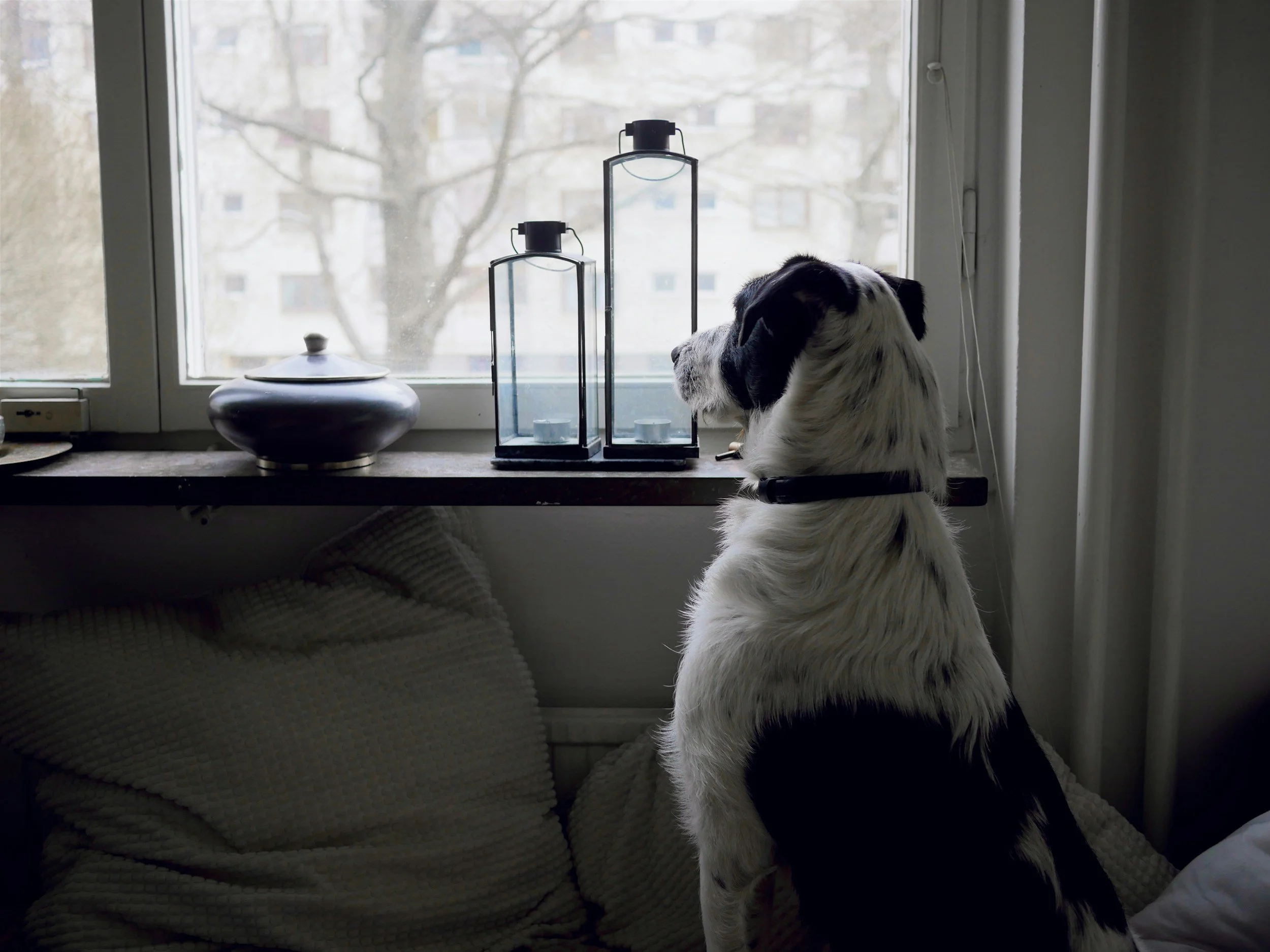
Most dogs would rather have company than be alone. Separation anxiety is something different. It's a state of real distress that a dog can't simply grow out of or be trained out of by being left to "get used to it." It's also common. Estimates vary between studies, but commonly cited figures put it somewhere between roughly 13% and 29% of dogs, which means many owners will meet it at some point. This post covers what it is, how to tell it apart from other problems, and what genuinely helps.
What Separation Anxiety Actually Is
Separation anxiety is a panic response that happens when a dog is left alone, or separated from a particular person. The dog isn't being naughty, spiteful or making a point. A dog who destroys a door frame, soils the house or howls for hours while you're out is in distress, not getting their own back. Understanding this changes how you respond to everything else. It's usually described as ranging from mild to severe. Some dogs are mildly unsettled when left. Others go into full panic within minutes. How severe it is for your dog shapes how much support they need.
Signs to Look For
The classic signs are destruction, vocalising and house soiling, and the key detail is that they happen when the dog is alone or separated from their person, and not when you're at home. Others are easy to miss:
Barking, howling or whining that starts soon after you leave
Chewing or scratching at doors, windows and furniture, often near the exits
Toileting indoors in a dog who is otherwise reliably house-trained
Pacing, panting, trembling or drooling
Refusing food or a favourite chew when left, even one they normally love
Anxiety before you've even left, such as following you from room to room, or becoming unsettled as you pick up your keys or put your shoes on
Frantic greetings when you return
Because you aren't there to see most of this, the most useful step is to set up a camera and watch what actually happens. It shows whether the behaviour starts the moment you leave, how long the distress lasts, and whether your dog ever settles. It's also what a vet or behaviourist will want to see.
Is It Really Separation Anxiety?
Several other things look similar, and treating the wrong one won't help.
Boredom or under-exercise: A dog who's under-stimulated may chew or bark when left, but generally settles, and the behaviour isn't triggered by the act of being left.
House-training gaps or medical causes: Soiling can come from a urinary infection, digestive upset or incomplete house-training rather than anxiety.
Noise or other fears: A dog who panics at fireworks, building work or traffic noise may be reacting to that and not to being alone.
Cognitive changes or pain in older dogs: Restlessness, night-time wandering and new anxiety in a senior dog can come from cognitive decline, sensory loss or discomfort. I touched on this in my post on grooming an older dog.
If anything about the picture is unclear, or the behaviour is sudden, a vet check is the sensible first step to rule out a medical cause.
Why It Develops
There's rarely one cause, and often it isn't clear. Common contributing factors include:
Big changes in routine or household: a house move, a change in working hours, a bereavement, or the loss of another pet
A sudden change in how much time you spend at home: dogs who've had constant company, through illness or holidays, can find a return to normal hard
A history of loss or rehoming: many rescue dogs have already lost a home or person, which I covered in my post on bringing a rescue dog home
Individual temperament and breed tendencies: some dogs are simply more attached or more anxious by nature, as I described in my post on choosing the right dog
None of this means you caused it. It does mean that gradual change and a consistent routine matter.
What Not to Do
Some well-meant responses make separation anxiety worse.
Don't punish. Telling a dog off for mess or damage when you return adds fear to anxiety. The dog can't connect the telling-off to what happened hours ago.
Avoid aversive tools. Bark collars, spray collars and anything that startles or hurts will increase distress.
Don't leave a panicking dog to "get used to it." Extending an absence because the dog is already upset is flooding, not training. Repeated full panic tends to entrench the problem.
Be careful with crates. A crate can be a safe space for a dog who's learned to love it, but a dog who panics when confined can injure themselves. If your dog is worse in a crate, stop and get advice.
Don't push through if your dog is distressed. If the camera shows a dog in genuine panic, shortening the absence is the right call.
What Actually Helps
Start with the basics: A tired, mentally satisfied dog copes better. Exercise and sniffing time before you leave, a calm period afterwards, and something safe and absorbing to do, such as a chew or food puzzle, all help. They won't cure separation anxiety on their own, but they set the stage.
Gradual absences, kept below your dog's threshold: This is the core of most effective treatment. Begin with absences so short your dog stays calm, a few seconds, then slightly longer, building up in small steps. If your dog shows distress, you've gone too fast and need to drop back to an easier level. Progress is rarely a straight line, and it's slower than most owners expect.
Take the sting out of departure cues: If your dog panics as soon as you pick up keys or put on a coat, practise those actions without leaving. Pick up the keys and sit down. Put on your coat and make a cup of tea. This weakens the link between the cue and the leaving.
Use a consistent "I'll be back" before you go: I'm a big believer in telling your dog you're coming back before you leave. Use the same calm phrase every time, "it's okay, I'll be back soon", then leave for a very short time, a minute at first. Come back calmly, say hello quietly and let your dog see that you did what you said. Then build up to two minutes, then three, extending only while your dog stays calm, until you've covered the length of time you actually need to be away. This gradual approach has research behind it. In a 2011 study published in Applied Animal Behaviour Science, owners used systematic desensitisation to treat eight dogs with separation-related problems, and the problem behaviour reduced significantly in every dog, even though not every owner followed the plan perfectly. The phrase itself is what's worked for me. Dogs don't understand the words as such, but they learn very quickly that it means you return. If your dog shows distress at any point, drop back to the last length of time they managed.
Keep departures and returns calm: A quiet exit and a low-key return avoid winding an already worried dog up further.
Create a settled routine: Predictable days help anxious dogs more than almost anything else. A consistent pattern of exercise, meals, rest and time alone helps them feel safe.
Natural calming support: Calm music or sound, and a covered, den-like bed, are low-risk things to try and may take the edge off. I covered these in my post on bringing a rescue dog home, including the care needed with aromatherapy. Treat them as extra support alongside training, not a replacement for it.
Managing the Gaps While You Train
Training takes time and in the meantime your dog still needs a plan for when you can't be there. Possible options include a trusted friend or family member, a dog walker, a daycare setting if your dog copes well with it, working from home where possible, or taking your dog with you.
Visits from a sitter, walker or friend. Whether a visit helps depends on your dog. Someone popping in can break up a long absence and mean your dog isn't left in panic for hours, which matters because repeated full panic tends to make the problem worse. For some dogs it lessens the distress. For others it doesn't, particularly dogs whose anxiety is about being apart from one particular person, or dogs who get upset all over again when the visitor leaves, so the visit adds a second departure. The only reliable way to tell is to use a camera and watch what happens before, during and after a visit. If your dog is calmer, keep it. If they're more worked up, try a longer visit, or someone who stays for the whole time you're out. Ask whoever comes to keep it calm and low-key, with no fuss on arrival or leaving. Visits are management, not training: they cover the gaps while you build your dog's ability to be alone through the gradual absences above.
Avoid boarding kennels. A dog who's already anxious without their person often copes poorly in a busy boarding kennel, with unfamiliar dogs, noise and unfamiliar routines. For these dogs, a pet sitter who stays in your home, or a trusted person looking after them in familiar surroundings, is often a kinder fit because it keeps their environment and routine intact.
When to Get Professional Help
Get help sooner rather than later if your dog is injuring themselves trying to escape, refusing to eat or settle when alone, or showing no improvement after a few weeks of consistent, careful training. Start with your vet to rule out medical causes, and ask for a referral to a qualified, force-free behaviourist. A veterinary behaviourist can build a plan around the video footage you've collected.
For severe cases, a veterinary behaviourist can build a plan around your dog’s footage, history and health, and will talk you through the options available. Getting expert help for a dog in real distress is a sign you’re taking it seriously, not a failure on your part.
Teaching Alone Time Early
For puppies and newly adopted dogs, teaching that being alone is safe and ordinary can help prevent problems. Start with very short periods in a different room while you're at home, build gradually, reward calm, and make sure your dog gets proper rest and company too. It won't prevent separation anxiety in every dog, since some are more prone to it than others, but it gives your dog a good start.
A Final Thought
Separation anxiety can be exhausting for owners, and often painful to live with. It also responds well to patient, gradual work, usually more slowly than you'd hope. The most useful shift is to see the behaviour as your dog asking for help, and to answer with calm, consistency and small steps. If you can do that, most dogs improve.