Are We Loving Our Dogs to Death?
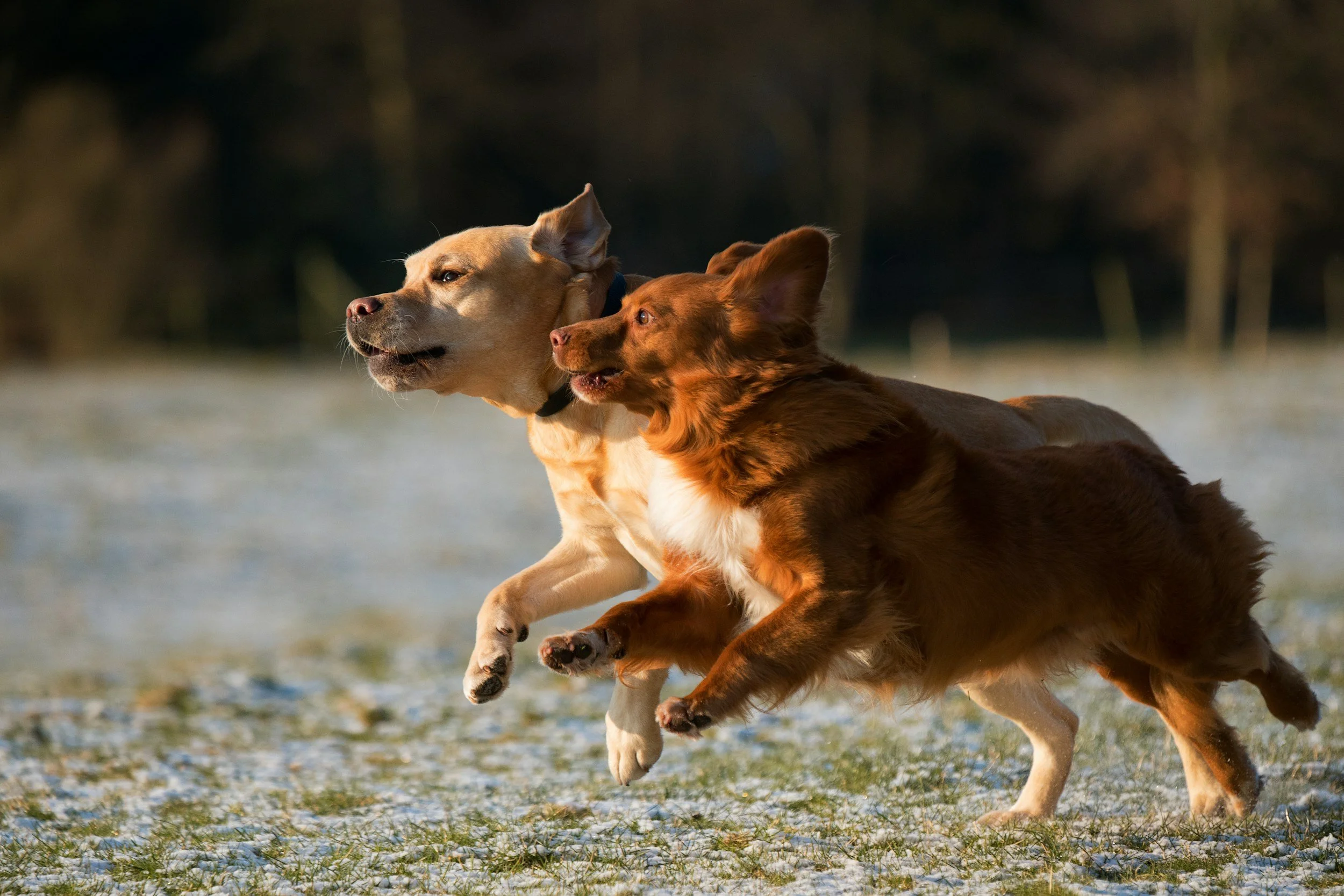
We have never loved our dogs more. They sleep in our beds, sit on our sofas, wear coats in winter and have birthday parties thrown in their honour. The pet industry is worth billions, and a significant chunk of that is built entirely on our desire to give our dogs the best of everything.
And yet chronic illness in dogs is rising sharply. A 2025 study published in the journal Risk Analysis, led by scientists at the Agricultural University of Athens, found that dogs and cats around the world are increasingly suffering from cancers, obesity, diabetes and degenerative joint disease - and that the rise mirrors patterns seen in human chronic illness, driven by environmental exposures, processed diets and modern lifestyle factors. In dogs over the age of ten, 50% will develop cancer - a figure that stops most people in their tracks when they hear it for the first time. Allergic skin disease affects hundreds of thousands of UK dogs, and according to a large-scale Kennel Club survey, allergic skin disorder is among the most commonly reported conditions across all breeds.
So what is going wrong?
In many cases the answer is uncomfortable: we are making our dogs ill with the very things we do out of love. The spot-on flea treatment applied every month because the packet says so. The worming tablet given on a schedule rather than a need. The annual vaccine booster because a reminder card arrived. The shampoo, the laundry detergent, the plastic bowl, the synthetic bed. Each one chosen with care. Each one worth a closer look.
None of these things come from negligence. They come from love - and from trust. Trust in the vet who recommended the treatment. Trust in the manufacturer who printed the schedule on the packet. Trust in a system that we have always assumed has our dog's best interests at heart. That trust is not misplaced as an instinct - but it does need to be combined with information. Because systems, schedules and products are not always designed with your individual dog's health as the sole priority. This blog is not about guilt or blame. It is about asking questions, understanding what you are giving your dog and why, and making informed choices. Because once you know better, you can do better.
Section 1 - What We Put On Them
Flea and Parasite Treatments
Walk into any pet shop and you will find an entire wall dedicated to flea and tick treatments. Spot-ons, collars, sprays, tablets - all promising to protect your dog from parasites. Most owners use them. Many use them every single month, all year round, whether their dog has fleas or not. It is one of the most normalised rituals in dog ownership, and one of the least questioned. Perhaps it should be questioned more.
Researchers at Imperial College London have called for an urgent review of prescribing practices for spot-on flea treatments, noting that many contain neonicotinoids - the same class of chemicals banned in agriculture due to their devastating impact on insect populations, particularly bees - yet are routinely applied to dogs monthly, often with no evidence that fleas are actually present. To put the scale of this into perspective, one monthly flea treatment for a large dog contains enough imidacloprid to kill 25 million bees. These are not trace amounts. These are significant doses of neurotoxic pesticide being applied directly to your dog's skin, absorbed into their body, and sitting in their system - month after month, year after year.
Another question worth asking is not just about chemical burden - it is also about whether these products are still doing what they claim. Despite manufacturer assurances, a growing number of owners and independent vets report that fipronil-based treatments are simply no longer working as they once did. Researchers have identified flea resistance to fipronil as a genuine and growing concern - a direct consequence of the same calendar-based, year-round overuse that has been standard practice for decades. We have created the problem with the very product sold to solve it.
Over fourteen years ago the decision was made to stop using chemical spot-on treatments on my own dogs entirely. That decision has never wavered. There are specific circumstances - an active infestation, a dog with severe flea allergy - where chemical treatment may be the most responsible immediate response. But for routine, year-round, calendar-based application with no evidence of infestation? There are non-toxic, plant-based spot-on alternatives worth exploring, and a growing number of holistic and integrative vets who can help you find an approach that works for your dog without the chemical burden.
The Fix - Flea and Parasite Prevention
The first and most important shift is a change of mindset - from calendar-based treatment to evidence-based treatment. Rather than applying a chemical product on a fixed schedule regardless of need, the starting point should always be: does my dog actually have fleas? If the answer is no, the case for applying a powerful pesticide to their coat is significantly weakened. For owners who want to move away from routine chemical spot-ons, there is a growing body of options worth exploring and discussing with a holistic or integrative vet. These include herbal and natural repellent sprays applied before walks and outdoor exposure, food-based supplements that work from the inside out to create an internal environment less hospitable to parasites, regular grooming and coat checking as a means of early detection rather than blanket prevention, and environmental management - hoovering frequently, washing bedding regularly at high temperatures and treating the home environment where fleas spend the majority of their life cycle.
None of these approaches is a silver bullet, and it is worth being honest about that. In areas of high flea pressure, in dogs with flea allergy dermatitis, or in specific circumstances where a vet identifies genuine risk, chemical treatment may well be the right call. The point is not that chemical treatments should never be used - it is that they should be used thoughtfully, when there is genuine need, rather than applied month after month to every dog as a matter of routine. For owners wanting to research natural parasite prevention further, the work of holistic vets such as Nick Thompson at Holisticvet UK and Dr Karen Becker is an excellent starting point. Both have written and spoken extensively on this subject and approach it with the rigour and balance it deserves.
What I do personally - and I share this as one informed dog owner, not as a professional recommendation. As I travel, the parasite landscape changes depending on where I am, so my own approach adapts accordingly. Parasite risk can vary significantly by region and season, so I'd always encourage checking with a local vet on what's currently prevalent in your specific area before settling on an approach.
A two-pronged natural approach that works from both inside and outside. Before every walk I apply a natural bug repellent spray - both Wildwash Bug Repellent Spray and The Neem Team spray are options I rate, both made with pure essential oils and free from harsh chemicals, acting as a natural deterrent against bugs, ticks and fleas on contact. For internal support, Repel by ProDog and Billy No Mates are both well-regarded natural supplements that work on the same inside-out principle - using natural ingredients to support an internal environment that is inhospitable to parasites while emitting natural repellent compounds through the coat. I have used Repel for some time and have more recently introduced Billy No Mates as an additional layer of protection during peak flea and tick season. Please read the full ingredient list and feeding guidelines for whichever supplement you choose, follow the dosage instructions carefully for your dog's weight, and consult your vet if any health conditions or medication are involved. As with everything in this blog - do your own research and make the decision that is right for your individual dog. If you suspect your dog has an active infestation, speak to your vet. Natural prevention is not the same as active treatment.
What We Put On Their Coat and Skin
Walk into a supermarket or browse online and you will find dog shampoos at every price point, in every scent imaginable - bubblegum, coconut, lavender, fresh linen. They smell wonderful. They lather beautifully. And many of them contain ingredients that have no business being anywhere near your dog's skin. Most mainstream dog shampoos contain sulphates, parabens, synthetic fragrances, phthalates and a range of other chemical compounds that strip the natural oils from the coat, disrupt the skin's microbiome and contribute to the very allergies and skin conditions that owners are then desperately trying to treat. The irony is painful - washing your dog with a cheap, heavily fragranced shampoo may be one of the things making their skin worse.
A dog's skin is thinner than human skin and significantly more absorbent. What goes onto it does not simply sit on the surface - it is absorbed. And unlike us, dogs cannot tell us their skin is burning, itching or reacting. They can only scratch, lick and chew - behaviours that are then frequently attributed to allergies, anxiety or habit rather than the product being applied to them.
What to look for and what to avoid: When choosing a shampoo or any grooming product for your dog, read the label. If a brand will not tell you what is in their product, that tells you everything you need to know. Look for products that are free from the following:
Sodium Lauryl Sulphate and Sodium Laureth Sulphate (SLS/SLES) - harsh detergents that strip the coat's natural oils and irritate the skin. Found in the majority of mainstream shampoos.
Parabens - synthetic preservatives linked to hormone disruption. Often listed as methylparaben, propylparaben or butylparaben on ingredient labels.
Synthetic fragrances - listed simply as "fragrance" or "parfum" on labels, these are catch-all terms that can represent dozens of undisclosed chemical compounds. If a shampoo smells strongly of artificial fragrance, put it down.
Phthalates - chemical plasticisers often used to carry synthetic fragrance, linked to endocrine disruption.
Petrochemicals and mineral oils - derived from crude oil, these coat the hair shaft and skin without nourishing them.
PEGs (polyethylene glycols) - synthetic compounds used as thickeners and emulsifiers, often contaminated with manufacturing by-products.
Phosphates - linked to skin irritation and environmental damage.
Look instead for products that list their full ingredients transparently, use 100% pure essential oils rather than synthetic fragrances, and are pH balanced specifically for dogs - whose skin has a different pH to humans, which is why human shampoo should never be used on a dog regardless of how gentle it seems. There are a growing number of genuinely good natural dog grooming brands available. Wildwash is one that is used professionally and personally and comes highly recommended - their full ingredient list is printed on every bottle, and their standard range covers every coat type and is ready to use without dilution. But there are also other good natural brands out there. The key is reading the label, knowing what to look for, and not being swayed by marketing language like "natural" or "gentle" without checking what is actually in the product.
For dogs suffering from itchy, reactive or allergy-prone skin, Lucaa+ Allergen Free Probiotic Spray is worth exploring. Rather than suppressing symptoms with steroids or antihistamines, it works by introducing beneficial probiotic bacteria that restore the skin's natural microbiome and actively break down the organic allergens - pollen, dust mite droppings and environmental triggers - on the coat and skin. It is vet approved, 99.8% natural, certified vegan and cruelty free. Spray directly onto the coat and brush through, paying particular attention to exposed skin areas such as paws, tummy, groin and ears. Always consult your vet if symptoms persist or you are in any doubt.
The Double Coat Myth - Why Shaving Is Not the Answer
Every summer without fail, as temperatures rise, groomers across the country receive the same request: can you shave my dog right down? It must be so hot in all that coat. It is a completely understandable instinct. We feel hot, we think about our dogs feeling hot, and we look at that thick coat and reach for the logical conclusion. The problem is that the conclusion is wrong - and in some cases, acting on it can cause lasting damage. Requests to shave Pomeranians, German Shepherds and Huskies are among those that get refused in professional grooming. Not to be difficult, but because shaving a double coated dog does not cool them down. It makes things worse.
A double coat is a highly sophisticated natural system. The dense undercoat acts as insulation - in winter it traps warm air close to the body, and in summer it does the opposite, trapping cooler air and protecting the dog from the heat of the sun. The outer guard hairs protect the skin from UV rays and insect bites. Remove that system entirely and you strip the dog of its natural temperature regulation, expose their skin directly to the sun, and risk a condition called post-clipping alopecia - where the coat grows back patchy, damaged or in some cases does not grow back correctly at all.
The answer is not the scissors. The answer is the brush. Regular brushing and professional grooming to remove the loose undercoat is what genuinely keeps a double coated - and indeed all coated - dog comfortable in summer. A coat packed with dead, loose undercoat cannot breathe and cannot do its job. Remove that undercoat properly and the coat can circulate air as it was designed to. This applies to all dogs regardless of coat type - a neglected coat of any kind traps heat and causes discomfort. If you are unsure whether your dog's coat is being managed correctly, speak to a professional groomer. It is not a vanity exercise. It is a health issue.
Section 2 - What We Put In Them (Beyond Food)
I've written about dog nutrition in depth elsewhere on this blog - worth a browse if you want to go deeper. This section focuses on what we give our dogs in the form of medical and preventative treatments.
Vaccines - Timing, Necessity and the Question Nobody Asks
Vaccination has long been presented as one of the cornerstones of responsible dog ownership. The reminder card arrives, the owner books in, the injection is given - often without any discussion of whether it is actually needed, whether the dog's immunity is still active, or whether the specific vaccines being administered are genuinely necessary for that individual dog's lifestyle and risk profile.
There is another dimension to puppy vaccination that almost no breeder or owner is ever told about, and it begins before the first injection is given. Puppies receive maternal antibodies from their mother through the colostrum - the first milk - in the hours immediately after birth. These antibodies provide crucial early protection, but they also actively interfere with vaccines. A vaccine administered while maternal antibodies are still circulating at sufficient levels may simply be neutralised before the puppy's own immune system has a chance to respond. The vaccination has been given, a tick has been put in a box, but no genuine immunity has necessarily been established.
The World Small Animal Veterinary Association acknowledges this in its own guidelines, noting that some puppies with high maternal antibody levels may be incapable of responding to vaccination until after twelve weeks of age. This is precisely why the standard protocol involves multiple doses at intervals - because it is impossible to know exactly when each individual puppy's maternal antibodies will have waned sufficiently for a vaccine to take effect. If you are able to keep a puppy with its mother until twelve weeks, this is worth doing for many reasons beyond immunity. If, like many owners, your puppy comes home at eight weeks, keeping them away from high-risk environments until twelve weeks and timing vaccination accordingly gives the vaccine the best possible chance of working with rather than against the puppy's own developing immune system. This is not veterinary advice - but it is a conversation worth having with an informed, open minded vet before automatically following a standard protocol without question.
Beyond the puppy stage, the standard approach in the UK is an annual booster. What many owners do not know is that immunity from core vaccines can last significantly longer than a year. The WSAVA guidelines recommend that core vaccines be given no more frequently than every three years after the initial puppy course. Yet annual boosters remain the norm in many practices, and the conversation about whether your individual dog actually needs a booster this year often simply does not happen. The alternative that an increasing number of holistic vets and informed owners are turning to is titre testing - a simple blood test that measures the level of antibodies in your dog's blood, confirming whether their immunity to a specific disease is still active. If it is - and in many cases it will be - there is no need for a booster. You are not guessing. You have evidence.
The Fix - Vaccination: Ask your vet about titre testing before automatically accepting an annual booster. If they are unfamiliar with it or dismissive of it, it may be worth seeking a second opinion from a holistic vet. Nick Thompson at Holisticvet is an excellent and trustworthy resource on vaccine protocols and one of the most informed voices on this subject in the UK.
Worming - Treatment Without Evidence
The standard worming advice given to most dog owners is to treat every three months, year round, with a chemical wormer. Like the flea treatment schedule, it is calendar-based rather than evidence-based. The worm treatment is given because the packet says every three months - not because anyone has established whether any worms are actually present.
The gut microbiome is a delicate and complex ecosystem. Repeated doses of chemical worming treatments do not only target worms - they affect the broader microbial environment of the gut, which has far reaching consequences for immune function, digestion and overall health. Giving a chemical wormer to a dog who has no worms is not a neutral act. It has a cost, even if that cost is invisible. There is a better way, and it is simple. A faecal egg count - a test of your dog's stool sample - will tell you definitively whether worms are present, and if so what type and how many. You treat when there is evidence of a problem. You do not treat when there is not.
The Fix: Postal worm egg count kits are widely available and easy to use from home if you're UK-based — reputable services include Wormcount.com, Feclab and Worm Counts for Dogs. You collect a small stool sample, post it to the lab, and receive results by email, usually within a few days. If you're outside the UK, ask your vet whether they can carry out a faecal egg count test locally — increasingly, progressive vets across the continent offer this as part of a more considered approach to parasite control. Testing several times a year gives a clear picture of your dog's parasite burden and means you only treat when there is genuine need.
Antibiotics and Steroids - The Default Response
This section is not about demonising vets or suggesting that antibiotics and steroids are never the right answer. Sometimes they absolutely are, and a good vet is an essential partner in your dog's health. But it is worth being aware that both antibiotics and steroids are, in some practices, prescribed as a default response rather than a last resort - particularly for skin conditions and recurring infections. A dog comes in scratching, a course of steroids is prescribed to stop the itch, the itch stops, and the underlying cause is never investigated. The itch stops, the owner is relieved, and nobody asks the most important question of all - what is causing it? Before accepting a repeat prescription, it is worth asking your vet one simple question: what is the underlying cause, and what can we do to address it rather than mask it?
Steroids suppress the immune system and have significant side effects with repeated use. Antibiotics destroy the gut microbiome indiscriminately - good bacteria alongside harmful ones - with consequences that can be long lasting. Neither is a trivial intervention. If your dog is repeatedly being prescribed either without any investigation into the root cause, it is entirely reasonable to push for answers. A holistic or integrative vet can be invaluable here. They are not opposed to conventional medicine - they work alongside it - but they approach health as a whole system rather than a set of individual symptoms to suppress.
Section 3 - What's In Their Environment
Your home is your dog's entire world. They cannot open a window, leave the room or ask you to turn off the plug-in. Whatever is in the air, on the floors and in the fabrics of your home, they are living in it twenty four hours a day - at nose height, close to the floor, where concentrations of airborne chemicals are highest.
Plug-In Air Fresheners and Scented Products
Few things are more ubiquitous in homes than the plug-in air freshener. They sit in hallways, bathrooms and living rooms, quietly and continuously releasing fragrance into the air. They smell clean and pleasant. They are also, for you and your pets, a significant and continuous source of chemical exposure. A study published in Environmental Impact Assessment Review tested 25 common air freshener and laundry products and found 133 different volatile organic compounds emitted across the range, with 24 classified as toxic or hazardous under federal law. Every single product tested emitted at least one. These compounds include formaldehyde, a known carcinogen, benzene, naphthalene and ethanol - the latter of which is toxic to dogs in relatively small amounts. Plug-in air fresheners are particularly problematic because they are positioned low to the ground, directly at nose height for most dogs, and release their chemical payload continuously rather than in single bursts.
A dog's nose is extraordinary - capable of detecting a single molecule in concentrations that would be invisible to us. Imagine then what it is to live in a home where a synthetic fragrance is being continuously pumped into the air at the level of your face, every hour of every day. We find it pleasant. For a dog it is relentless, and the compounds behind that fragrance are not benign. The same applies to heavily scented candles, synthetic room sprays, fabric sprays, incense, perfumes, cosmetics and toiletries. None of these are neutral in a home with a dog.
Laundry Products
Your dog spends a significant portion of their life in their bed and on their blankets. Whatever you wash those items with stays in the fabric - and your dog breathes it in, lies in it and absorbs it through their skin every single day. Most mainstream laundry detergents are heavily fragranced and contain a cocktail of synthetic chemicals including optical brighteners, phosphates, synthetic surfactants and fragrance compounds that linger long after washing. That fresh, clean scent you can still smell on your dog's bedding three days later? That is residual chemical fragrance sitting in the fabric against your dog's skin.
Everything in our house - including all bedding and blankets - is washed with Molly's Suds Fragrance Free Laundry Detergent, available on Amazon UK. With only 12 to 13 simple, plant-derived ingredients and none of the chemicals found in conventional brands - no synthetic fragrances, no optical brighteners, no phosphates, no parabens, no phthalates, no formaldehyde - it cleans thoroughly without the chemical payload. There are also other good fragrance free, natural laundry products available - the key is checking the ingredient list and avoiding anything with synthetic fragrance, optical brighteners or phosphates.
Cleaning Products
The floors your dog walks on, lies on and licks are cleaned with whatever product you use on them. Most conventional floor cleaners, antibacterial sprays and multi-surface products contain chemicals that are harmful to dogs - including quaternary ammonium compounds, chlorine-based disinfectants and synthetic fragrances. Your dog then walks through the residue, picks it up on their paws, and licks it off in their next grooming session. Consider switching to pet-safe, natural cleaning products throughout your home. White vinegar and water is one of the most effective and genuinely pet-safe floor cleaners available - not glamorous, but it works, and there is nothing in it that will harm your dog.
Garden Chemicals
Weedkillers, pesticides, lawn treatments and slug pellets are routinely used in UK gardens - and dogs walk through them, roll in them and lick their paws after contact. Glyphosate, the active ingredient in many popular weedkillers including Roundup, has been the subject of significant scientific concern regarding its links to cancer in both humans and animals. Many slug pellets contain metaldehyde or iron phosphate - the former is acutely toxic to dogs and has caused deaths. The simplest fix here is to stop using them. A dog-friendly garden does not need chemical treatments. Manual weeding, natural deterrents and accepting that a garden shared with a dog will never be a show garden are the most straightforward approaches.
Toxic Plants
This is a long list and a full version is available from the Dogs Trust and similar organisations, but common garden and household plants toxic to dogs include foxglove, yew, rhododendron, azalea, lily of the valley, laburnum, bluebells and daffodil bulbs. Indoors, common toxic plants include peace lily, pothos and snake plant among many others. If you have a dog - particularly a puppy or a curious one - it is worth checking every plant in your home and garden against a reliable toxic plant list and removing or placing out of reach anything that poses a risk.
Section 4 - What They Sleep and Play With
We choose our dogs' beds, toys and bowls with love. We want them comfortable, stimulated and well cared for. But the materials that fill most mainstream dog beds, the plastics in most dog toys and the coatings on most cheap dog bowls are a source of daily, low level chemical exposure that almost nobody thinks about.
Dog Beds
Pick up a cheap dog bed from a supermarket or high street pet shop and you are likely to find it filled with polyester fibrefill or memory foam, covered in synthetic fabric, and treated with chemical flame retardants to meet fire safety regulations. Your dog spends potentially twelve or more hours a day in this bed, breathing the off-gassing from synthetic foam and flame retardant chemicals, lying against synthetic fabric, in a microclimate that concentrates whatever is in those materials around them. Memory foam in particular - marketed aggressively as the premium orthopaedic option for dogs - is a polyurethane foam that off-gasses volatile organic compounds including toluene and benzene, particularly when new. It is not a natural material and it does not belong in a dog bed.
The alternative is natural materials. Wool, organic cotton, natural latex and coconut fibre are breathable, temperature regulating, naturally antimicrobial and free from the chemical treatments that synthetic materials require. Wool is naturally flame retardant - meaning no chemical flame retardant treatment is needed. It is also moisture wicking, odour resistant and temperature regulating in both directions, keeping dogs cool in summer and warm in winter.
Baavet in the UK produce wool-filled beds that are genuinely excellent - personally used and recommended. For those looking for a natural orthopaedic option, Hixx make exceptional beds built from organic latex, coconut fibre and British lambswool - no memory foam, no synthetic fillers, no chemical treatments. Their materials and the integrity of their approach are impressive, and they are well worth exploring for owners of older dogs or those with joint issues. For blankets, organic cotton works beautifully for chilly nights in warmer weather - breathable, light and free from the pesticide residues that can remain in non-organic cotton. For winter, hand knitted pure wool blankets are the ideal - and arguably one of the most loving things you can give a dog to sleep with.
Collars
Your dog's collar sits against their skin and coat every single day. Most collars are made from nylon or other synthetic materials, often dyed with chemical dyes and finished with synthetic coatings. Leather is a far better option - natural, durable, gets softer with age, and sits against the coat without the friction and chemical burden of synthetic alternatives. For dogs with sensitive skin or finer coats, the difference can be significant.
Dog Toys
The average dog toy is made from synthetic rubber, hard plastic, polyester plush and chemical dyes. Your dog chews these, mouths them, carries them and sleeps with them. BPA, phthalates and other plasticisers leach from plastic and synthetic rubber toys, particularly as they break down with chewing - and your dog is ingesting those compounds with every play session. There are genuinely good alternatives. Green and Wilds make eco dog toys from pure jute - a natural, biodegradable plant fibre - and split leather offcuts that would otherwise go to waste. No synthetic compounds, no chemical dyes, nothing harmful released when chewed. They are tough, long lasting and genuinely good fun. Peace With The Wild stock a range of natural, plastic-free dog toys that align completely with the ethos of this blog - sustainably made, natural materials, safe for dogs and kinder to the planet. As with all toys, supervise play and replace when heavily worn. No toy is indestructible.
Dog Bowls
Plastic bowls are one of the most overlooked sources of chemical exposure in a dog's daily routine. BPA, phthalates and other plasticisers leach from plastic bowls into food and water - and this leaching increases with heat, scratching and age. A bowl that has been used for a year or two and is covered in fine scratches from your dog's teeth is releasing chemicals into every meal. Melamine bowls - those hard, often brightly coloured composite bowls sold everywhere - are similarly problematic. Melamine can leach formaldehyde into food, particularly with hot food or acidic ingredients. The fix is straightforward: stainless steel. Durable, easy to clean, non-toxic and genuinely long lasting - stainless steel will not scratch, leach or degrade. Yeti make excellent stainless steel bowls that are built to last a lifetime. For dogs who eat too fast, stainless steel slow feeder bowls are a simple, effective and completely non-toxic solution - widely available on Amazon. Ceramic bowls from a reputable source are also a safe option, provided the glaze is confirmed lead-free.
Section 5 - Lifestyle Choices Made With Love
Obesity and the Treat Culture
Food is one of the most instinctive ways we express care for our dogs - a treat for good behaviour, a biscuit because they looked at us in that way, a bit of whatever we are eating because they asked so nicely. The problem is that modern commercial dog treats are, in many cases, little more than processed junk food - full of additives, artificial flavourings, preservatives, low quality ingredients and sugar. Given in the quantities that some owners tend to give them, they can contribute significantly to weight gain, poor dental health and the kind of low level inflammatory burden that, over years, takes a quiet toll on a dog's health.
Obesity in dogs is one of the most significant and preventable welfare issues we face. Surveys estimate that between 50 and 60 percent of domestic dogs are overweight - and overweight dogs face significantly higher risks of joint disease, diabetes, heart conditions, reduced mobility and shortened lives. We are, quite literally, loving them to an early grave with food. The fix is not to stop treating your dog. It is to ‘treat’ them better.
Chew bones are one of the finest treats you can give a dog - and one of the most overlooked. A good quality natural chew bone from a reputable brand such as Anco satisfies the deeply instinctive need to chew, supports dental health, provides genuine mental stimulation and keeps a dog occupied in a way that a processed biscuit simply cannot. They are a treat in the truest sense of the word - something that delivers genuine pleasure and genuine benefit. Always supervise your dog with a chew bone and choose an appropriate size for your dog's breed and chewing strength.
For everyday treats, whole foods are far superior to anything that comes in a packet. Blueberries, apple slices, carrot and kefir are the treats used here with Lily and Grace, and they are received with just as much enthusiasm as any processed alternative. Kefir in particular is worth a mention - a fermented milk product that is a natural probiotic, supporting gut health and immune function. Most dogs adore it. A small amount added to food or offered as a treat is a genuinely beneficial addition to any dog's diet. Please refer to the nutrition blog on this site for further guidance on safe and beneficial whole foods for dogs.
A note on weight: learn to body condition score your dog rather than relying solely on the scales. You should be able to feel - but not prominently see - your dog's ribs. A visible waist when viewed from above and an abdominal tuck when viewed from the side are signs of a healthy weight. If in doubt, ask your vet or a knowledgeable groomer - the coat often masks weight gain that is obvious once you put your hands on the dog.
Over-Exercising Puppies - The Damage Done Before You Know It
One of the most common mistakes made by well-intentioned puppy owners is too much, too soon when it comes to exercise. A puppy is a bundle of energy and enthusiasm, and the instinct is to match that energy - long walks, runs in the park, endless games of fetch. It feels like the responsible, caring thing to do. But a puppy's skeletal system is not finished. Until growth plates - the areas of developing cartilage at the ends of the long bones - have fully closed and hardened into solid bone, they are vulnerable. High impact exercise, repetitive loading, jumping from heights, sharp turns at speed and forced exercise on hard surfaces can damage these growth plates, with consequences that range from subtle developmental abnormalities to significant deformity and lifelong joint problems. Growth plates in most dogs close between twelve and eighteen months of age - and in larger breeds, this process can take even longer. This means the window of vulnerability is longer than most owners realise.
The important distinction here is the type of exercise rather than simply the amount. Research is clear that normal free play, gentle walking and natural movement do not damage growth plates - and in fact support healthy skeletal development. What causes damage is high impact, repetitive, forced exercise. Running alongside a bicycle, long hikes on hard terrain, repeated jumping and agility work are all activities that should wait until the puppy's skeleton is mature. Free play in a safe environment, short gentle walks, swimming and calm exploration are all appropriate for a young puppy. Let the puppy set the pace and stop when they choose to stop. A puppy that sits down mid-walk is telling you something - listen to them.
Socialisation - Quality Over Quantity
Ask most puppy owners what socialisation means and they will describe puppy classes and trips to the dog park - exposure to as many dogs and people as possible, as quickly as possible, in the belief that more is always better. This is one of the most widely accepted pieces of puppy advice given, and one of the most potentially damaging. True socialisation is not about flooding a puppy with overwhelming experiences and hoping they come out the other side confident. It is about carefully controlled, positive exposure to the world - building genuine confidence incrementally, at the puppy's own pace, in environments you can manage. Confidence cannot be forced. It has to be built.
Dog parks in particular are worth approaching with significant caution. A dog park is an uncontrolled environment where you have no knowledge of the other dogs' temperaments, training, health or history. A single frightening or traumatic experience with another dog during a puppy's critical development window can create fear and reactivity that takes years to address - if it can be addressed at all. The potential upside of a dog park visit rarely justifies that risk for a young puppy. Puppy classes vary enormously in quality - and some of the most popular ones, despite their good intentions, create as many problems as they solve. Classes that allow puppies to interact freely in a chaotic group setting, or that use outdated methods, can overwhelm sensitive puppies and reward the wrong behaviours. If you choose a puppy class, look for one with small numbers, a calm environment, a knowledgeable trainer, and a clear understanding of canine body language and stress signals.
The approach to socialisation that makes great sense is the one used by experienced gundog trainers - controlled, purposeful exposure to the world, building on success, in the company of calm and stable dogs that model appropriate behaviour. The Mordor Gundogs YouTube channel is an excellent and genuinely trustworthy resource on this subject, and their video on proper socialisation in particular is well worth watching for any new puppy owner regardless of breed or intended purpose. True socialisation means your puppy has learned that the world is safe and manageable. It does not mean your puppy has met every dog in the neighbourhood.
Closing
This blog covers a lot of ground, and if you have read this far you may be feeling a little overwhelmed. Please do not be. The intention was never to make you feel guilty about every product under your sink or every treat you have ever given your dog. The intention was to give you information - the kind of information that most of us were never given, and that the systems we trust do not always volunteer.
The good news is that none of this requires an overnight overhaul of everything. Small, considered swaps made over time add up to a significant reduction in your dog's overall chemical and toxic load. A different laundry detergent. A natural shampoo. A stainless steel bowl. A chew bone instead of a processed treat. These are not dramatic gestures - they are quiet acts of genuine care that, accumulated over a dog's lifetime, can make a real difference to their health and longevity.
Your dog cannot read a label, research an ingredient or question a vet. They rely entirely on you to make those judgements on their behalf. This blog is simply an invitation to make them a little more informed. As always - do your own research, ask questions, and make the decisions that are right for your individual dog. Nobody knows your dog better than you do.