Understanding Raw: Why Every Raw Food Isn't the Same
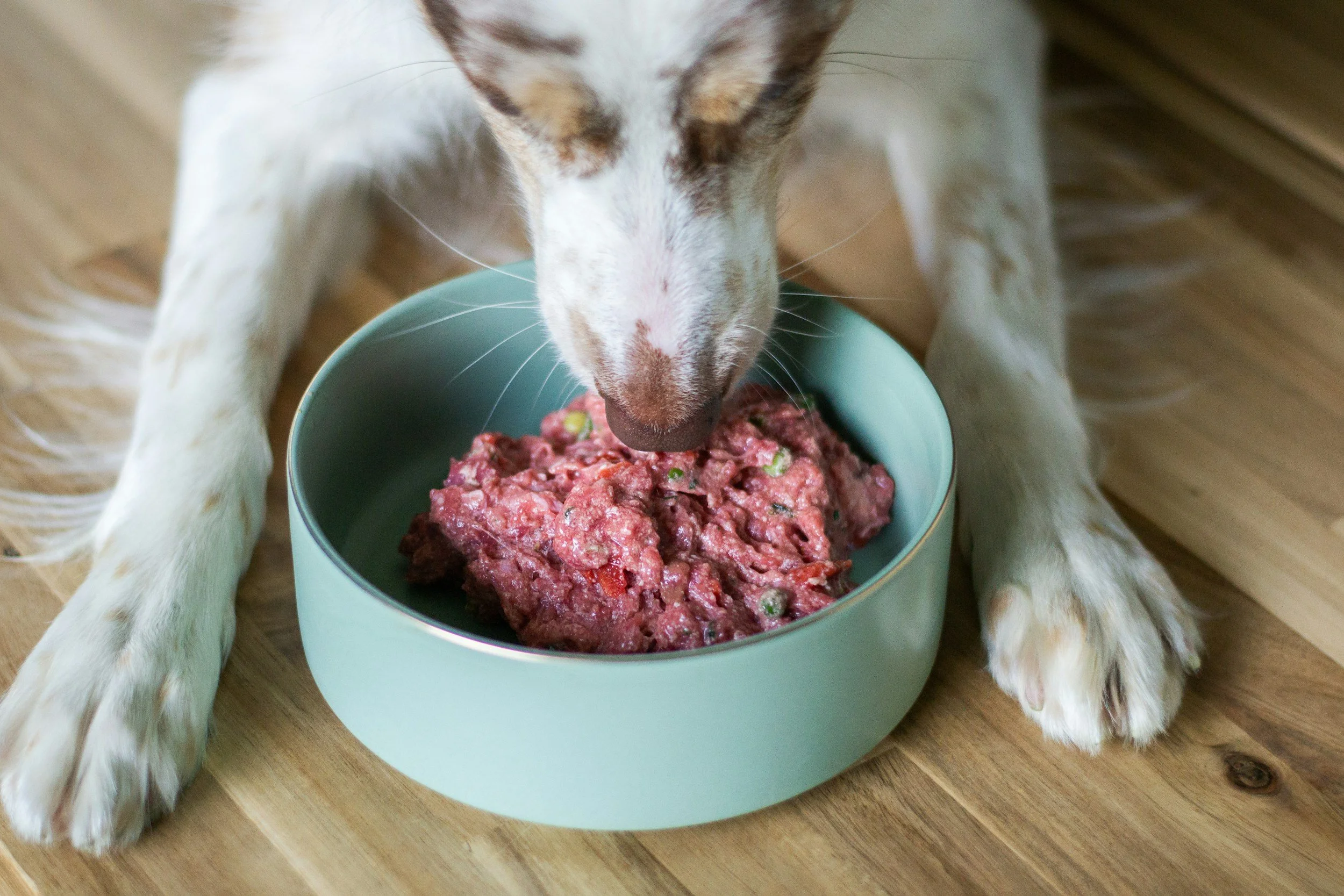
If you've decided raw feeding is right for your dog, the next challenge often catches people off guard: raw isn't one thing. Walk into a specialist pet shop's freezer section, or browse online, and you'll find dozens of products that all say "raw" on the label but vary enormously in composition, different bone content, different organ ratios, different formats entirely. Understanding these differences matters, because the wrong choice for your dog's individual needs can cause real problems, while the right one genuinely supports their health.
The Standard Ratio, and Why It's a Starting Point, Not a Rule
Most complete raw diets are built around a rough ratio of 80% muscle meat, 10% bone, and 10% organ (with liver typically making up around half of that organ portion, so roughly 5% of the total). This ratio is designed to mimic what a wild canid would naturally consume from a whole prey animal, and it's a genuinely sound baseline for a healthy adult dog. But "roughly 80/10/10" covers a lot of ground, and different brands and formulations sit at different points within, and sometimes outside that range, each with real consequences for your dog.
Bone Content: What It Does and Why It Varies
Higher bone content provides more calcium and phosphorus, and, where the bone is included as identifiable pieces rather than fully ground, offers genuine dental benefits, as the mechanical action of chewing and gnawing helps clean teeth naturally. It also tends to produce firmer, smaller stools, since bone content is a major factor in stool consistency on a raw diet.
Lower bone content (or boneless raw, sometimes labelled "meat and offal" or similar) removes the choking or dental injury risk some owners worry about with bone-in products, and can be gentler for dogs with dental disease, missing teeth, or a history of bone-related digestive upset. The trade-off is that boneless raw is not nutritionally complete on its own, it lacks the calcium and phosphorus that bone provides and must either be paired with a calcium supplement or fed alongside a bone-inclusive meal to balance out across the week, rather than fed as the sole diet long-term.
A genuinely common mistake: feeding boneless raw as if it were complete. Always check whether a product is labelled complete (bone content already balanced in) or as a "boneless" or "meat only" option intended to be combined with something else. This is one of the most important labels to actually read, not skim.
Ground bone vs. whole/chunk bone: Products vary in whether the bone is finely ground into the mince (invisible, no dental benefit, but easier for dogs who can't manage whole bone) or included as recognisable raw meaty bone pieces (visible, chewable, provides the dental cleaning action, but requires a dog capable of managing it safely). Neither is "better" universally — it depends on your dog's dental health, chewing style, and any history of gulping food too quickly.
Organ Content: More Isn't Automatically Better
Standard raw formulations include organ meat at around 10% of the total, roughly half of that as liver specifically. Some brands market "organ-boosted" or "offal-rich" formulas with a noticeably higher organ percentage, marketed as more nutrient-dense. This can genuinely be beneficial in moderation, organ meat is exceptionally nutrient-dense, as covered in my post on budget-friendly nutritional upgrades, but a formula with meaningfully more than the standard around 10% organ content, fed as a regular complete diet rather than an occasional addition, can risk vitamin A toxicity over time, particularly if liver makes up a large share of that increased organ content.
Single organ vs. mixed organ: Some products use only liver as their organ source; others include a mix of liver, kidney, heart and spleen. A varied organ mix provides a broader spread of nutrients, heart, for example, is an excellent source of taurine, important for cardiac health, so a mixed-organ formula is generally preferable to a liver-only one where available.
Muscle Meat: Single Protein vs. Multi-Protein
Single protein formulas (chicken only, or beef only, for example) are particularly useful for dogs with suspected food sensitivities or allergies, since they make it far easier to identify whether a specific protein is causing a reaction, you simply can't get a clean elimination trial from a food containing five different meats.
Multi-protein or "mixed" formulas offer more variety and, arguably, a broader spread of amino acid profiles across proteins, but make troubleshooting a reaction much harder if one develops. If your dog has no known sensitivities, multi-protein formulas are a perfectly reasonable, often more convenient choice. If your dog has any history of skin issues, digestive upset, or suspected allergies, a single protein formula makes it far easier to identify what, if anything, doesn't agree with them.
A related point worth noting: variety across multiple protein sources over time, rather than sticking to just one or two proteins long-term, helps ensure a broader nutritional spread and reduces the risk of a dog developing a sensitivity to any single protein through repeated, exclusive exposure. This applies once you've established your dog tolerates raw well; it's not a contradiction of the single-protein advice above for dogs actively being trialled for a suspected sensitivity, that's a different, more targeted situation.
Green Tripe: Worth Knowing About Separately
Green tripe, the unwashed stomach lining of a grazing animal, distinct from the bleached white tripe sold for human consumption, deserves a specific mention, since it's a genuinely valued addition in raw feeding circles but looks and smells unlike anything else on this list. It's naturally rich in digestive enzymes, probiotics, and a well-balanced calcium-to-phosphorus ratio of its own. Most dogs find it highly palatable, even though most owners find the smell genuinely unpleasant. It's typically included as one component within a mixed raw diet rather than fed as a sole food.
Mince, Chunks, and Patties: Format Affects Practicality More Than Nutrition
Beyond the composition itself, raw food comes in different physical formats - fine mince, coarser mince with visible bone and meat pieces, formed patties, or whole cuts and meaty bones. This is largely a practicality question rather than a nutritional one, assuming the underlying composition is the same:
Fine mince is easiest for portioning and mixing with toppers, and generally the most fuss-free format for owners but provides no dental benefit since there's nothing to chew.
Coarser mince or chunks offer some chewing engagement without the full commitment of a whole meaty bone, a reasonable middle ground for many dogs.
Whole raw meaty bones and cuts provide the most genuine dental and enrichment benefit, but require supervision and a dog capable of managing them safely, not appropriate for dogs prone to gulping, or those with significant dental disease.
Preparation and Handling: What Matters Beyond the Ingredients
Never heat raw food that contains bone. This is worth stating plainly, because it's an easy mistake for anyone used to warming food slightly to make it more appealing (a technique covered in my post on transitioning diets, useful for kibble and cold pressed). Raw bone becomes brittle and dangerous the moment it's heated, the same mechanism that makes a cooked Sunday roast bone hazardous applies here. Even gently warming a raw meal that contains bone content risks turning it into exactly the splintering hazard covered in my post on foods to avoid. If you want to take the chill off a raw meal, sit it at room temperature for a short while before feeding rather than applying any heat directly, and never microwave or heat raw food containing bone under any circumstances.
Don't discard the blood. Many raw products, particularly minced or ground formulations, come with a noticeable amount of blood in the packaging, and it's a common instinct to drain this away before serving, treating it a bit like the liquid from a tin. Don't. Blood is a genuinely valuable part of the meal, it's naturally rich in iron and other minerals, and it's also an excellent source of hydration, raw diets in general tend to have a much higher moisture content than kibble, which is one of their genuine advantages. Serving the meal with the blood included rather than poured away means your dog gets the full nutritional value of what you're feeding, not a drained-down version of it.
Bone size must match the dog, not just the diet. It's not enough that a product is "bone-inclusive," the size and type of bone matter enormously for safety. A bone piece sized for a Labrador is genuinely dangerous fed whole to a Chihuahua, posing a choking risk, while a piece too small for a large, powerful chewer may be swallowed whole rather than chewed, losing the dental benefit and creating its own choking risk. Always match bone size to your individual dog's size, jaw strength and chewing style, and supervise every session, particularly when introducing a new bone size or type for the first time.
Thaw safely, not on the counter. If feeding frozen raw, thaw it in the fridge rather than at room temperature, for the same food safety reasons you'd apply to raw meat for your own household. This slows bacterial growth during the thawing process. Once thawed, use within the timeframe stated on the packaging, generally 24–48 hours, and never refreeze raw food that's already been thawed.
Basic hygiene matters, and it's simple. Feed on a surface that's easy to clean and disinfect after each meal, stainless steel bowls, covered in the topic of dog bowls in my blog Are We Loving Our Dogs to Death, are ideal for this reason among others. Wash your hands after handling raw food, just as you would preparing raw meat for your own dinner and keep raw dog food separate from human food in the fridge and freezer. None of this is complicated, but it's worth doing consistently rather than only when you remember.
Fur, feather and fibre content aren't a flaw. Some raw formulations, particularly those closer to a true prey-model approach, include a small amount of ground fur, feather, or fibrous plant matter from the digestive tract of the prey animal. If you spot this in an ingredient list and assume it's a filler or an error, it isn't, this mimics what a wild canid would naturally consume as part of a whole prey animal, and provides a source of natural fibre that supports healthy stool formation. It's a deliberate, considered inclusion in a well-formulated product, not a corner being cut.
What This Means for Choosing a Product
There's no single "best" raw formulation - the right choice depends on your individual dog's dental health, any known sensitivities, age, and how you intend to feed (as a sole complete diet, or as part of a mixed and rotated approach). A few practical starting points:
For a straightforward, complete diet with no particular concerns: a standard 80/10/10 complete formula from a reputable brand, mixed protein if your dog has no known sensitivities.
For a dog with suspected food sensitivities: a single protein, complete formula, so you can properly trial and identify triggers.
For a dog with dental disease or a history of bone-related issues: a boneless or finely ground option, balanced with an appropriate calcium source as advised by a canine nutritionist.
For a dog who needs the dental benefits of chewing: a formula that includes identifiable raw meaty bone pieces, always supervised.
As with every format covered on this blog, checking any specific product on All About Dog Food website before committing to it is a worthwhile step, it will confirm exactly what you're looking at, rather than relying on marketing language alone.