Choosing the Right Dog for You: Beyond Just Falling in Love
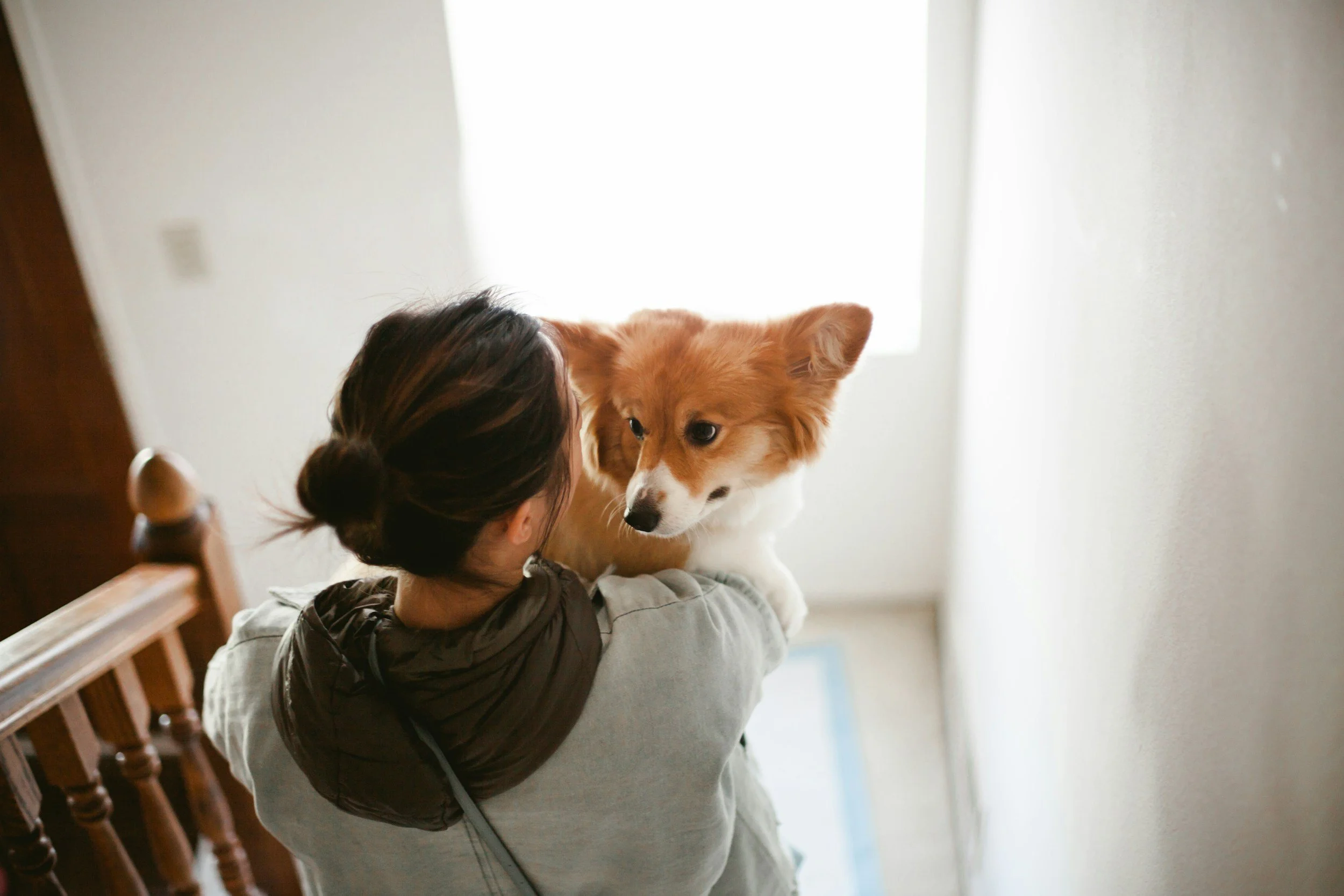
Every year, thousands of dogs end up in rescue centres, not because they were bad dogs, but because they were the wrong dog for the life they landed in. A gorgeous-looking Border Collie in a flat with no garden and two dog-walks a week. A boisterous young Labrador in a household that wanted a calm companion for gentle strolls. None of this is anyone's fault in the way it sometimes gets framed, it's usually a simple mismatch between what a breed genuinely needs and what a home can genuinely provide, worked out too late. This post is about working it out before you bring a dog home, not after.
Start With Your Actual Life, Not Your Ideal Life
It's tempting to choose a dog based on the life you'd like to have, more outdoor time, more structure, more exercise, rather than the life you actually have right now. Be honest with yourself about your current routine: how many hours a day is the house empty, how much time can you genuinely commit to exercise and training on a normal, unremarkable Tuesday, not a weekend, what does your living situation actually allow for. A dog chosen for the life you're aspiring to rather than the life you're living is one of the most common root causes of a mismatch that ends in real difficulty for both of you.
Energy Level Is the Single Biggest Factor
More than breed, more than size, more than coat, energy level is the factor most likely to make or break the match between a dog and a home. A high-energy dog in a low-activity home doesn't become calm through neglect of their needs, they become frustrated, and that frustration very often shows up as behaviour problems, destructiveness, excessive barking, reactivity, that owners then struggle to understand or address, without realising the root cause was simply an unmet need for physical and mental stimulation from day one.
Working lines vs. show lines vs. pet lines: This is a distinction worth understanding within a single breed, because it genuinely matters. A working-bred Cocker Spaniel or Springer Spaniel, bred over generations for stamina and drive in the field, has meaningfully higher exercise and mental stimulation needs than a show-bred or pet-bred dog of the exact same breed. If you're getting a breed with working lines, ask the breeder directly which line the parents come from, this single question can tell you more about what you're actually taking on than the breed name alone.
A rough guide, not a rulebook:
Very high energy: Working Spaniels, Collies, Malinois, Vizslas, Weimaraners. These dogs generally need serious daily physical exercise plus real mental engagement, training, scent work, a job of some kind, not just a walk around the block. Without it, most become genuinely difficult to live with.
High energy: Retrievers, most terriers, Huskies. Substantial daily exercise needed, though generally more adaptable than the very high energy group if that need is consistently met.
Moderate energy: Many spaniel pet lines, Beagles, Standard Poodles, most crossbreeds. A solid daily walk plus some mental stimulation is usually sufficient.
Lower energy: Many toy breeds, Basset Hounds, Bulldogs, Greyhounds (genuinely, despite their reputation for speed, most are surprisingly low energy day to day, built for short bursts rather than endurance). Shorter, more moderate exercise needs, though "lower energy" is never the same as "no needs at all."
This is a general guide, not a guarantee, individual dogs vary considerably even within a breed, but it's a genuinely useful starting point when you're weighing up options.
Temperament and Household Fit
Beyond energy, think honestly about temperament traits and how they'll sit within your actual household.
Independence vs. velcro tendencies: Some breeds, Basenjis, many hound breeds, are bred to work somewhat independently of humans and can be genuinely more content with their own company. Others, many gundog breeds, several toy breeds, are bred to work in close partnership with people and can struggle badly with being left alone. If you work long hours or travel frequently, a breed with a strong tendency toward separation-related distress is setting both of you up for a difficult road. I'll be covering separation anxiety in more depth in a future post, well worth watching for if this is a genuine consideration for your household.
Prey drive and other households: If you have cats, small pets, livestock, or regularly encounter them, a breed or individual dog with high prey drive needs honest consideration. This isn't about writing off entire breeds, plenty of individual dogs with historically high prey drive live peacefully with cats, but it's a genuine variable worth researching and, wherever possible, meeting the individual dog around the animals they'll be living with before committing.
Sound sensitivity and reactivity tendencies: Some breeds and lines are more prone to noise sensitivity or general reactivity than others. If you live somewhere loud, near a busy road, in a flat with thin walls, in an area with regular fireworks, this is worth factoring in, not as a dealbreaker, but as something to be aware of and prepared to support.
Children in the Household
If you have children, or children are regularly in your home, this needs honest, specific consideration, not as an afterthought, but as a genuine factor shaping which breed and which individual dog is the right fit.
Breed tendencies with children: Some breeds are genuinely more historically suited to family life with children than others, breeds like Retrievers, many spaniels, and Beagles are often noted for a naturally patient, tolerant temperament, though this is never a guarantee for any individual dog. Conversely, some breeds with a strong herding instinct, Collies in particular, can nip at running, shrieking children, not out of aggression, but because chasing and controlling movement is a deeply bred-in instinct. This doesn't rule these breeds out, but it does mean a genuinely committed approach to training and management around children is essential, not optional.
Energy level and size matter more with young children: A large, boisterous, high-energy young dog can inadvertently knock over or overwhelm a small child, simply through size and exuberance rather than any intent to cause harm. Equally, a small toy breed can be genuinely at risk of injury from a well-meaning but not-yet-gentle toddler. Think honestly about the size and energy combination in the context of your children's ages, not just the dog in isolation.
Puppies and young children together is a serious commitment, not a default choice: A puppy needs consistent, careful training and supervision, and doing that well while also caring for young children is genuinely demanding. It's a very reasonable and often better choice to consider a calm, well-assessed adult or senior rescue dog with a known temperament around children, rather than assuming a puppy is automatically the right "family dog" choice simply because it will grow up alongside the kids.
Management and supervision are non-negotiable, whatever the breed: No breed, however historically gentle its reputation, should ever be left unsupervised with young children. The vast majority of dog bites involving children happen with a familiar family dog, not a strange one, and are frequently linked to the dog being pushed past a stress threshold that an adult wasn't monitoring closely enough. Teaching children how to interact respectfully with a dog and never leaving the two together unsupervised regardless of how trustworthy the dog seems, is one of the single most important things a parent can do, for the safety of both the child and the dog.
Your Own Health and Physical Capability
Choosing a dog based on physical capability, both now and realistically in the future, is just as important as choosing based on lifestyle, and it's a consideration that often gets overlooked until it becomes a real problem.
Physical strength and control: A large, strong, high-energy breed needs an owner capable of physically managing them, on lead, at the vet, in an emergency. If you have limited strength, mobility issues, or a condition affecting balance or grip, a powerful, pulling-prone breed can genuinely become unsafe to handle, not through any fault of the dog, but through a simple mismatch of physical capability. This isn't about ruling out larger breeds entirely, good training makes an enormous difference, but it's worth an honest assessment of what you can safely manage, particularly in an unexpected situation like a sudden lunge toward another dog or a startled reaction.
Exercise needs and your own mobility: A dog's exercise needs have to be genuinely met by someone, and if mobility issues, chronic illness, or a condition with unpredictable flare-ups affect your ability to provide that consistently, it's worth thinking honestly about lower-energy breeds, or building a support plan in advance, dog walkers, family members, doggy daycare, rather than assuming you'll manage day to day without one. If you're currently recovering from an injury, surgery, or a temporary health setback, it's also worth genuinely considering waiting until you've recovered before bringing a dog home, rather than taking one on mid-recovery and hoping to catch up once you're better. A dog, and particularly a puppy, deserves consistency from day one, and starting on the back foot rarely serves either of you well.
Bending, grooming and physical care: Ongoing physical care, grooming, nail trimming, general handling, requires a degree of bending, kneeling and physical dexterity that's worth considering honestly if you have joint issues, chronic pain, or reduced mobility. A lower-maintenance coat type, covered in more detail in my post on coat types, or budgeting for regular professional grooming support, can make a real difference here.
Dogs as genuine support: It's also worth saying, for some people managing a disability or chronic health condition, a dog can be a source of genuine, meaningful support, structure, companionship, and in some cases specific trained assistance. This isn't something I'm qualified to advise on in detail, but if you're considering a dog specifically for this kind of support, organisations who specialise in assistance and support dogs are a far better starting point than a general pet breeder or rescue, since matching the right dog to the right role and person takes genuine specialist expertise.
Being honest without guilt: None of this is about telling anyone with a health condition or disability that a dog isn't for them, it's about the same principle running through this whole post, an honest, unsentimental look at capability and need, so that whatever dog comes home is genuinely set up to thrive with the owner they've got, exactly as that owner actually is, not as they wish they were.
Living Environment: City, Suburban, or Countryside
Where you actually live, day to day, shapes what kind of dog will thrive with you just as much as your activity levels or household composition do.
City and flat living: This doesn't automatically rule out any breed, but it does change what "meeting a dog's needs" looks like in practice. Without a garden, every toileting need means a trip outside, worth thinking through honestly for a puppy needing frequent access in the early months. Noise sensitivity also matters more here, breeds prone to reactivity or vocal tendencies can become a genuine source of stress for both you and your neighbours in a flat with shared walls. That said, many dogs do well in city living provided their exercise needs are met through committed daily walks and outings, since a garden alone was never a substitute for a proper walk regardless of the setting.
No garden, but near green space: If you're in a flat or a home without a garden but have genuinely easy access to parks, woodland, or open space nearby, this changes the picture considerably, proximity to safe, varied off-lead space can matter more than having your own patch of grass, particularly for higher-energy breeds who need real space to run rather than just somewhere to relieve themselves.
Suburban homes with a garden: Often considered the easiest fit, a garden provides useful off-lead space for toileting and some independent exercise, though it's worth being honest that a garden is never a replacement for a proper daily walk, dogs need mental stimulation and a change of environment that a garden alone can't provide, however large.
Rural and countryside living: Generally suits higher-energy, working-type breeds particularly well, more space, more varied terrain, often easier access to safe off-lead exercise. Worth considering too, though, livestock and wildlife exposure, a countryside setting with sheep, poultry or other livestock nearby genuinely changes which breeds and individual temperaments are a sensible fit, prey drive and any tendency to chase becomes a much more serious, practical consideration than it might be for a dog who only ever encounters a park.
Renting: Worth a specific, practical mention, if you rent, always confirm your tenancy genuinely permits a dog, including any breed or size restrictions, before falling for a specific dog. This sounds obvious, but it's a heartbreakingly common reason dogs end up back in rescue, a home found for the dog before the paperwork was properly checked.
Your Work Pattern and Time Alone
How much time a dog will realistically spend alone is one of the most important, and most commonly underestimated factors in choosing the right dog, and it's worth being genuinely honest about your actual working pattern before committing.
Full-time office or out-of-home work: If you're out of the house for eight or more hours most days, this needs a real plan, not an assumption that the dog will simply cope. Most dogs, and puppies in particular, cannot be left alone for a full working day, especially in the early months. A realistic plan might include a dog walker or pet sitter midway through the day, doggy daycare, a colleague or family member nearby, or a genuinely flexible work pattern that allows regular breaks. Whatever the plan, it needs to exist before the dog comes home, not be figured out reactively once separation-related distress or house-training setbacks start showing up. And if, honestly, none of these options are genuinely available to you, that's worth sitting with rather than working around. Not every life stage suits dog ownership, and recognising that now is a far kinder outcome, for you and for the dog, than bringing one home and hoping it somehow works out.
Remote or hybrid work: Generally a much easier starting point, since a dog gets far more company and a more naturally broken-up day. Worth being honest, though, that being home doesn't automatically mean a dog's needs are being met, a dog alone in another room while you're on back-to-back calls all day still needs proper breaks, exercise and attention built into the day, not just physical proximity.
Working from home some days, out others: Probably the most common pattern now, and one worth planning around specifically, a dog who gets full days of company on some days and a long stretch alone on others can find the inconsistency genuinely harder to settle into than a predictable routine either way. Building a consistent plan for the "out" days in particular, rather than treating them as an occasional exception, sets a dog up far better than hoping they'll simply adjust.
Do pet sitters and dog walkers genuinely help? Yes, when used properly, a good, reliable pet sitter or dog walker breaking up a long day can make a real, meaningful difference to a dog's wellbeing, exercise, toileting, company, and a change of scenery partway through an otherwise long stretch alone. It's not a substitute for genuine ownership commitment, but it is a legitimate, valuable part of a realistic care plan for many working owners, and it's worth researching and building this into your budget and routine from the outset if your work pattern requires it, rather than treating it as a last resort once problems have already started.
Travel and time away: Beyond the working week, think honestly about how often you travel, for work or otherwise, and what your plan is for the dog during those periods, a trusted pet sitter, family, or boarding. It's also worth thinking about the kind of care that actually suits your individual dog, a dog used to a calm, attentive, indoor home life can find a busy boarding kennel environment, full of unfamiliar dogs, barking, and constant noise, genuinely stressful, however well run the kennel is. For a dog like this, in-home pet sitting or a quieter, more familiar form of care is often a far kinder fit than boarding, simply because it keeps their normal environment and routine intact rather than adding a jarring change on top of your absence. A dog whose care plan only works when everything goes perfectly is a fragile plan, worth building in the flexibility for real life before you need it.
The Financial Reality
Every breed and every individual dog comes with a genuinely wide range of possible lifetime costs, and it's worth being honest about this before falling for a specific dog, rather than working it out as the bills arrive.
Diet costs vary enormously by size and feeding choice: A small dog on a good quality kibble costs meaningfully less to feed than a large or giant breed on the same food, simply through volume. Feeding choice matters just as much as size, a fresh, raw, or specialist therapeutic diet, all covered in depth elsewhere on this blog, typically costs considerably more than a standard kibble, sometimes several times more for a large dog. This isn't a reason to avoid those options, but it is a genuine, ongoing monthly cost worth factoring into your budget honestly from the outset, not discovering after you've already committed to a feeding philosophy you can't sustain.
Grooming costs, ongoing, not one-off: As covered in my post on coat types, some coats need professional grooming every four to six weeks, indefinitely, for the dog's entire life. This is a genuine recurring cost, not a one-off puppy expense, and it varies considerably by coat type and by your local groomer's pricing. Factor in the coat type you're drawn to as an ongoing line item, not an occasional treat.
Insurance and routine veterinary care: Monthly insurance premiums vary significantly by breed, age, and any pre-existing conditions, with some breeds prone to particular hereditary conditions costing noticeably more to insure. Beyond insurance, routine care, vaccinations or titre testing, dental care, parasite prevention, annual check-ups, adds up as a genuine ongoing cost regardless of whether your dog stays perfectly healthy.
The unexpected costs: Even with insurance, there are ongoing costs insurance doesn't cover, excesses, some medications, and the genuine possibility of a significant unexpected bill even with a young, healthy dog. It's worth having some kind of financial buffer or savings specifically earmarked for this, rather than assuming routine costs are the whole picture.
Equipment, training, and the less obvious costs: Bedding, a good quality harness or collar, toys, crates, training classes, dog walking or daycare if your schedule requires it, boarding or a pet sitter for time away. None of these are enormous individually, but they add up, particularly in the first year.
An honest, unsentimental question: Can you comfortably sustain the full range of costs, food, grooming, insurance, routine care, and a genuine emergency buffer, for the entire lifetime of the dog you're considering, which for many breeds is well into double figures? This isn't about being wealthy, it's about being realistic, and it's one of the kindest things you can do for a dog before bringing them home, rather than after.
Puppy, Adult, or Senior?
Puppies are, unsurprisingly, the most demanding option, intensive early training, socialisation, house-training, and a level of chaos that catches even experienced owners off guard. They're also the option with the least known quantity, personality and health can still shift and reveal themselves as the dog matures.
Adult dogs, particularly from rescue, come with an established personality you can actually assess, what you see in terms of temperament and energy is generally closer to what you'll continue to get, without the guesswork of puppyhood. A good rescue organisation will have fostered the dog and can give you an honest, lived-in picture of who they actually are, not just how they present in a kennel environment.
Senior dogs are, in my view, one of the most overlooked and undervalued options available. Lower exercise needs, generally calmer, often already house-trained and well-mannered, and giving a home to a dog whose remaining years might otherwise be spent in kennels is one of the most quietly meaningful choices an owner can make. If your lifestyle suits a lower-energy companion, please don't overlook the senior dogs waiting for homes.
Considering a Disabled or Chronically Ill Dog
Dogs with a disability, chronic illness, or ongoing medical need are among the hardest to rehome, and among the most overlooked when people are choosing a dog, yet for the right owner, they can make genuinely wonderful, loving companions.
What this can actually involve: A three-legged dog, a dog with a sensory impairment like deafness or blindness, a dog with a manageable chronic condition like epilepsy, diabetes, or a heart condition, or a dog requiring ongoing medication or a specific therapeutic diet. Many of these dogs live full, genuinely happy lives with fairly modest adjustments to routine, rather than the constant, dramatic caretaking people sometimes assume.
Being honest about what's required: This isn't a route to take on sentiment alone. It's worth being genuinely honest about your own capacity, financial, for ongoing medication, specialist food, or regular vet monitoring; time, for any additional care routines a specific condition requires; and emotional, since some conditions do involve a harder road, and a shorter one, than a healthy young dog. None of this should discourage you if you're genuinely able to offer it, but going in with eyes open matters enormously, both for your own wellbeing and the dog's.
A specific and often deeply rewarding choice: Deaf and blind dogs in particular are very frequently overlooked in rescue settings, purely out of assumption rather than any real difficulty, most adapt remarkably well, relying more heavily on their other senses and on consistent routine and training adaptations, hand signals for deaf dogs, verbal cues and consistent furniture placement for blind dogs. For the right owner, willing to learn these adaptations, these dogs are every bit as capable of a full, happy life as any other.
Speak to the rescue in depth: If you're drawn to this path, a good rescue organisation will talk you through exactly what day-to-day life with that specific dog and their specific condition genuinely looks like, ongoing costs, likely progression if the condition is degenerative, and the practical adaptations involved, rather than leaving you to find out after the fact. This is one of the areas where an honest, detailed conversation before committing matters more than almost anywhere else in this whole post.
A Note on Breeders vs. Rescue
Both are legitimate routes to bringing a dog into your life, and this isn't about telling you which one to choose. What matters far more than the route itself is doing it properly. If going to a breeder, that means health-testing parents, seeing the puppy with its mother, asking about temperament and working line where relevant, and avoiding anyone who can't or won't answer detailed questions openly. If going to rescue, that means being honest with the organisation about your lifestyle and experience level and trusting their assessment of a dog's suitability for your home over your own instant emotional pull toward a particular face. A good rescue organisation isn't trying to talk you out of a dog you love, they're trying to prevent exactly the kind of mismatch this whole post is about.
The Questions Worth Asking Yourself Honestly
Before you commit to any individual dog, a few honest questions worth sitting with:
What does my actual, average week look like, not my best week or my aspirational week?
How much time, realistically, can I commit to exercise and training every single day, indefinitely, not just for the first exciting few months?
What's my budget for food, insurance, grooming, and unexpected vet costs, sustained over ten to fifteen years or more?
Who else lives in my home, and how do their needs and tolerances factor in?
Am I drawn to this specific breed or dog because it genuinely suits my life, or because of how they look?
None of these questions are about talking yourself out of getting a dog. They're about making sure the dog you do bring home is set up to thrive in the life you can actually offer, rather than the life you hoped you'd have. And if, after everything in this post, the honest answer right now is that the timing or circumstances genuinely aren't right, that's not a failure, it's exactly the kind of clear-eyed thinking this whole post has been encouraging. The right dog at the right time, for both of you, is always worth waiting for. Getting this right at the very start is, without question, the single biggest thing you can do to set both of you up for a genuinely happy life together.