Puppy's First Groom: Setting the Foundation for a Lifetime of Calm Grooming
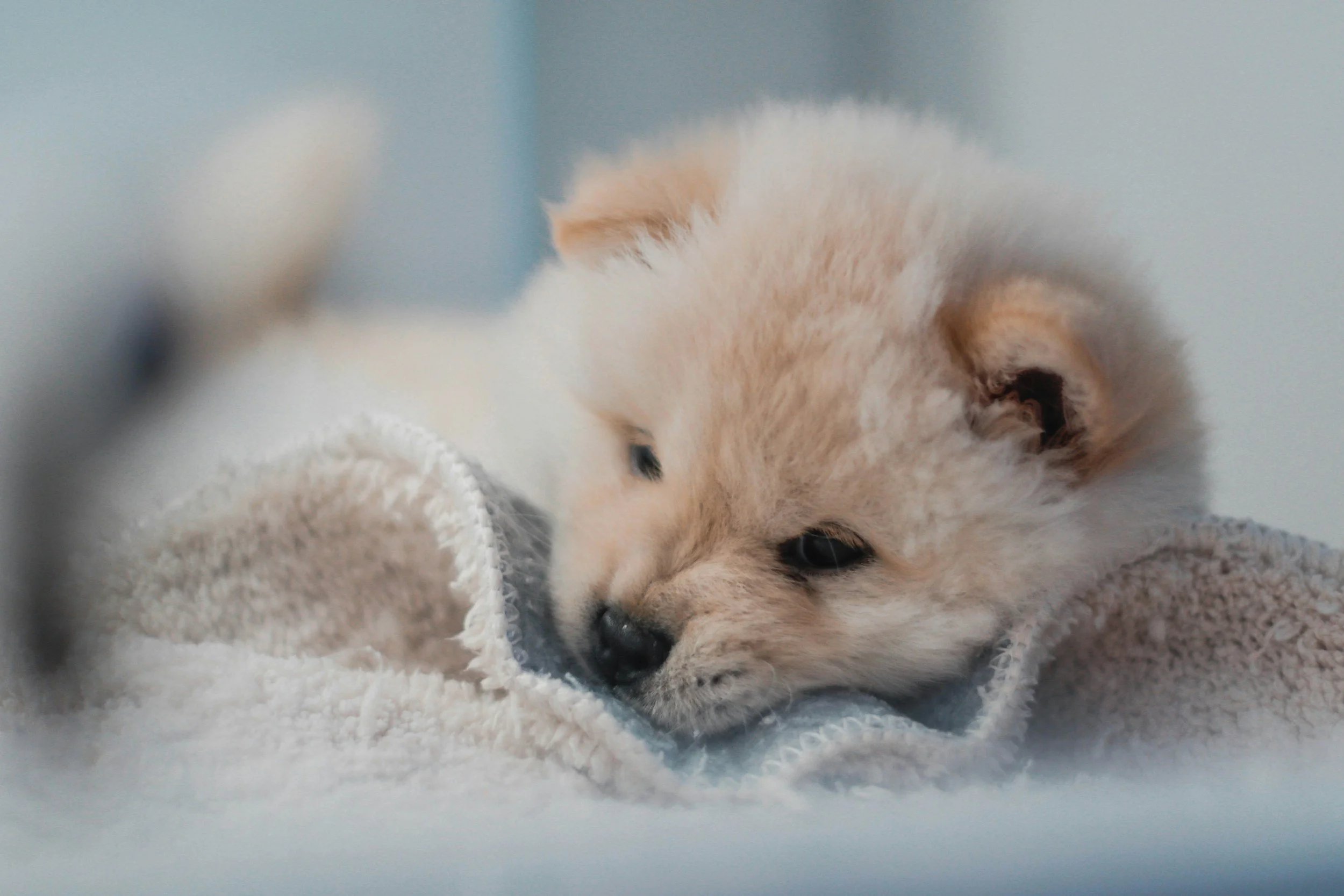
One of the strongest influences on how a dog handles grooming as an adult is how their very first grooming experiences went as a puppy. Temperament and coat type both play a genuine role too, but early experience matters enormously. A puppy who learns early that having their paws touched, their ears checked and their coat brushed is simply a normal, unremarkable part of life is far more likely to remain easy to groom for the rest of their years. A puppy who's rushed, overwhelmed or frightened during those early sessions can carry that anxiety into every grooming appointment that follows. This post is about getting those crucial early weeks right.
Start Before You Think You Need To
The instinct for many new puppy owners is to wait, to hold off on any real grooming until the coat actually needs it. This is understandable, but it's also a missed opportunity. The goal of early handling isn't really about the coat at all in those first few weeks, it's about building comfort with being touched, in all the places grooming requires: paws, ears, mouth, tail, belly, between the toes. A puppy who's had these areas handled gently and positively from the moment they arrive home will accept a nail trim or an ear check far more readily at four months than one who's never had those areas touched until grooming becomes unavoidable.
How to start: Short, calm handling sessions, just a minute or two at a time, worked into everyday moments. While your puppy is relaxed after a meal or a play session, gently touch their paws, look between their toes, lift an ear and look inside, open their mouth briefly, run a hand down their tail. Pair every bit of this with a calm voice and a small reward, a piece of food, genuine praise, whatever your puppy responds to. The aim is simple: being touched in these places predicts something good, not something to brace against.
Introducing Tools Before You Actually Need Them
A common mistake is the first time a puppy ever sees a brush is the first time it's used on them, at which point it's already an unfamiliar object doing an unfamiliar thing to their coat. Far better to introduce grooming tools as neutral, unthreatening objects well before you actually need to use them properly.
How to do it: Let your puppy sniff and investigate a soft brush, a nail clipper, a comb, entirely at their own pace, with no expectation attached. Reward calm curiosity. Once they're relaxed around the tool simply existing, introduce very brief, gentle contact, a few strokes of a soft brush along the back, nothing more, paired again with reward and praise. Build duration gradually over days and weeks, always stopping well before your puppy shows any sign of discomfort or disinterest. The goal at this stage is never a thorough groom, it's a positive association with the process.
The First Actual Brush
Once your puppy is comfortable with tool introduction, the first real brushing sessions should be short, gentle, and set up for success rather than thoroughness.
Choosing the right tool for a puppy coat: Puppy coats are generally softer and finer than the adult coat that will eventually replace it, and a tool that's appropriate for an adult dog of the same breed can be too harsh for a young puppy's skin. A soft-bristle brush or a grooming mitt is usually the gentlest starting point regardless of eventual coat type, saving anything firmer, like a slicker brush or undercoat rake, for once the adult coat is properly coming through.
Keep sessions genuinely short: Two to five minutes is plenty for a young puppy. It's far better to end a session while your puppy is still relaxed and engaged than to push on until they become fidgety or distressed, ending on a bad note undoes far more progress than a short, successful session builds. If you sense restlessness building, that's the moment to stop, not the moment to rush through the rest.
Little and often beats occasional and thorough: Daily short sessions build genuine comfort far more effectively than longer, less frequent ones. This is particularly true for breeds who'll need serious ongoing coat maintenance as adults, the daily habit you build now is the foundation for a lifetime of manageable grooming.
Bath Time: Making the First Experience a Good One
A puppy's first bath sets a tone that can last a lifetime, and it's worth taking real care over it.
Water temperature and depth: Lukewarm water, never hot or cold, and shallow enough that a puppy feels secure rather than unsteady. A non-slip mat in the bottom of the bath or basin makes a genuine difference to a puppy's confidence, a dog who feels their feet sliding out from under them during their first bath is likely to associate bathing with feeling unsafe from that point onward.
Product choice matters from day one: A puppy's skin is even more delicate and permeable than an adult dog's, making the choice of shampoo genuinely important, not just a nice-to-have. A gentle, natural, pH-balanced puppy-specific shampoo, free from sulphates, parabens and synthetic fragrance, is worth seeking out specifically, the same reasoning covered in more depth in my post on grooming mistakes applies even more strongly to a puppy's developing skin.
Keep it brief and calm: A puppy's first bath doesn't need to be a thorough deep clean, it needs to be a positive, unremarkable experience. Wash gently, rinse thoroughly, and dry with a soft towel, saving hairdryers for once your puppy has built up tolerance and confidence with the whole process over several sessions.
Ears, Eyes, Nails and Teeth: The Often-Skipped Areas
Beyond coat care, a handful of specific areas deserve deliberate, gentle early handling, since they're often the parts of an adult grooming routine that dogs find most difficult if not introduced early.
Ears: Gently lift the ear flap and look inside regularly from puppyhood, without necessarily cleaning anything, simply normalising the handling. This makes an actual ear clean, when needed, far less of an ordeal later.
Nails: Perhaps the single area most adult dogs struggle with, and almost always because early handling was rushed or skipped. Gently touching and holding each paw, one toe at a time, with reward and calm praise, long before any clippers come near, builds the tolerance that makes an actual trim manageable. When you do introduce a nail clipper, simply touching it to a nail without cutting, paired with reward, for several sessions before the first actual trim, makes an enormous difference.
Mouth and teeth: Gently lifting a lip and touching teeth and gums, building toward brief tooth brushing with a puppy-safe toothpaste, sets up dental care as a normal part of life rather than a battle. I've covered dental care in more detail elsewhere on this blog, well worth reading alongside this.
When to Book the First Professional Groom
For low-maintenance coat types, a first professional groom often isn't necessary until closer to six months. For higher-maintenance coat types, particularly curly or continuously growing coats, an earlier introduction, sometimes as young as twelve to sixteen weeks, purely as a positive, low-pressure introductory visit rather than a full groom, can be genuinely valuable.
What a good introductory puppy visit looks like: A calm, unhurried session focused on building positive association with the grooming environment itself, the table, the dryer noise, being handled by someone other than you, rather than achieving a particular finished look. A good groomer will happily do a short, reward-based introductory session with a young puppy rather than diving straight into a full groom, and it's worth specifically asking for this rather than assuming a standard full appointment is the right first step.
What to look for in a groomer for a young puppy: Patience above all else. Ask how they typically handle a puppy's first visit, a groomer who talks about building confidence gradually over a puppy's early visits, rather than simply getting the job done in one sitting, is the right kind of groomer for this stage.
If Things Don't Go Smoothly
Some puppies, regardless of how carefully you approach it, will still have wobbles, a tricky day, a reaction to a particular tool, a moment of genuine distress. This doesn't undo everything you've built, and it's not a sign you've done something wrong.
If a session goes badly: Don't push through to try to "fix" it in the same session. End calmly, on as neutral a note as you can manage, and try again another day with a shorter, easier version of whatever triggered the difficulty. Going backwards briefly, to an easier stage, is often the fastest way forward.
If your puppy seems generally anxious about handling, beyond normal puppy wobbles: This is worth mentioning to your vet or a qualified trainer, since genuine handling anxiety benefits from a structured desensitisation approach rather than simply persisting with regular grooming attempts and hoping it improves on its own.
The Investment That Pays Off for Years
The time spent in these early weeks and months, patient, unhurried, genuinely low-pressure, is one of the best investments you can make in your puppy's whole future relationship with grooming. A dog who finds grooming easy and unremarkable as an adult was very often a puppy whose owner took the time to make those first experiences calm, positive and entirely without rush. It's a small, quiet effort now for a much easier lifetime ahead, for both of you.