Small Additions, Big Difference: A Simple Way to Feed Better
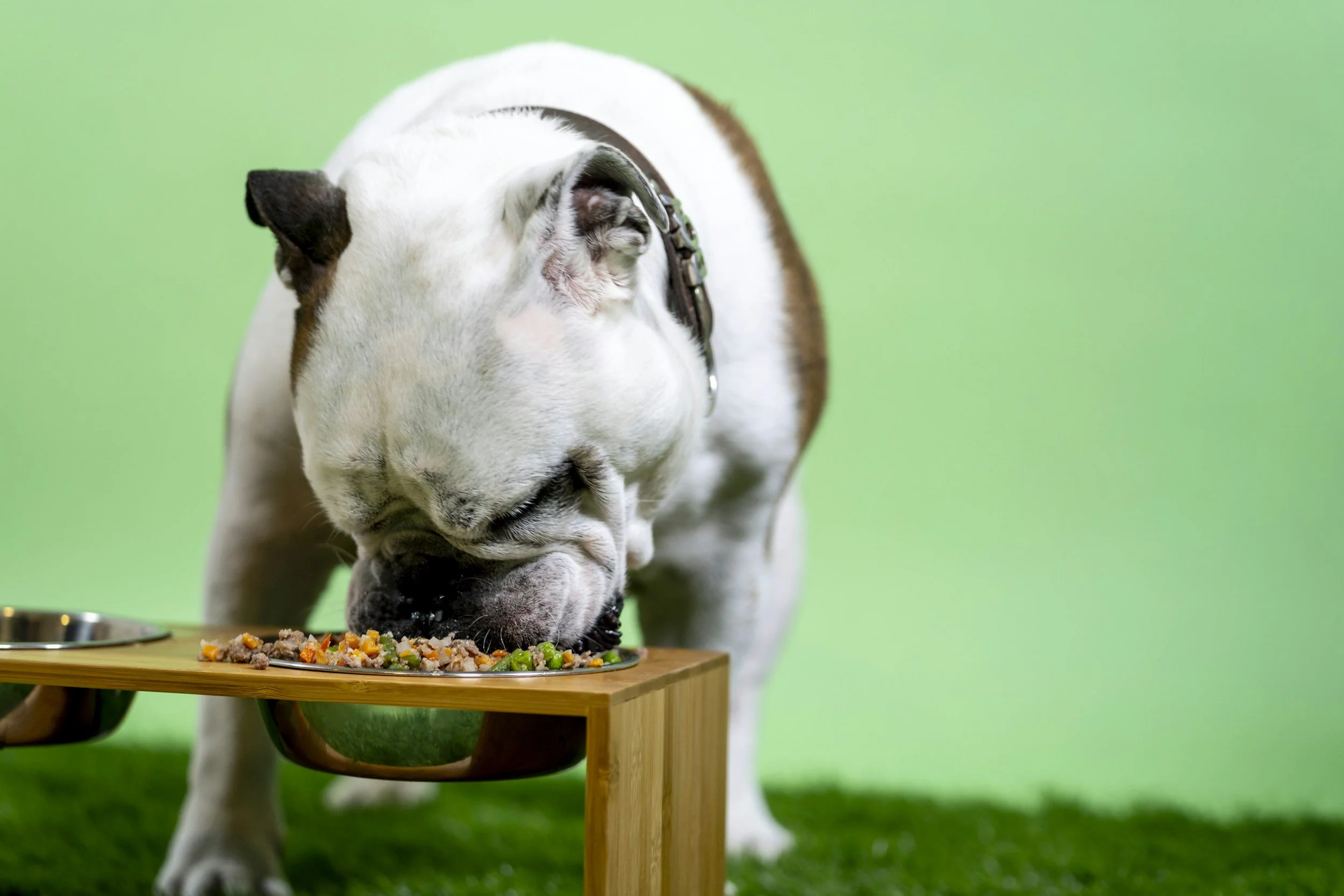
Not every dog owner is in a position to feed raw, cold pressed, or premium freeze dried food every day. Life, budget, time and practicality are all real factors. What matters is making the best choices you can within your circumstances, and then building on them wherever possible. Even if kibble is staying in the bowl, there's a great deal you can do to meaningfully improve what your dog is getting, without dramatically increasing what you spend.
Step One: Upgrade the Base Food
Before we talk about additions, this needs to be said clearly: toppers and additions work best when they're building on a solid foundation. Adding a beautifully nutritious egg to a bowl of poor quality kibble full of meat and animal derivatives, artificial preservatives and 55% carbohydrates is a little like adding a vitamin tablet to a diet of junk food. It helps at the margins, but it doesn't fix the underlying problem.
If your dog is currently on a mainstream supermarket brand or a heavily marketed budget kibble, the single most impactful thing you can do for their long-term health is to switch to a better quality kibble first. You don't need to go straight to raw or spend a fortune. You simply need to find a genuinely good dry food, one that rates well, uses named proteins with declared percentages, and doesn't rely on vague fillers and artificial additives. The difference in cost between a poor kibble and a good one is often smaller than people expect. And because better quality food is more nutrient-dense, you frequently feed slightly less of it, which offsets some of the price difference. Once you have a good quality base food in place, the additions below will genuinely amplify its benefits rather than simply compensating for its shortcomings.
Step Two: Add Real Food to the Bowl
This approach is championed by canine nutritionists more broadly, rooted in the idea that small, consistent whole-food additions can make a profound difference to a dog's health over time, without requiring owners to overhaul their entire feeding routine. The principle is simple: real, whole foods provide nutrients in their natural form, with the co-factors, enzymes and bioavailability that synthetic supplements in processed food simply cannot fully replicate. A little added regularly is far more valuable than a lot added occasionally.
Where budget allows, choose organic for your additions even if the base food isn't organic. This is the most practical and affordable way to bring meaningful organic nutrition into your dog's diet. A box of organic eggs, a can of sustainably caught sardines, a bag of organic blueberries - none of these break the bank, and collectively they make a genuine difference. Here's what to add, and why:
Eggs: One of the most nutritionally complete foods you can add to your dog's bowl. Eggs are an excellent source of high-quality protein, healthy fats, vitamins A, D and B12, riboflavin, selenium and choline, which supports brain health and liver function. The yolk in particular is nutritionally dense. How to feed: Lightly scrambled or raw, both are fine for healthy dogs. Raw egg white fed in large quantities over time can interfere with biotin absorption, so if feeding raw, feed the whole egg rather than whites only. A free-range organic egg three to five times a week is a meaningful addition for most dogs.
Plain cooked meat (chicken, turkey, beef, etc.): One of the simplest and most accessible additions of all, since it's often already in the house. A genuinely good source of easily digestible protein. How to feed: Plain and unseasoned only, no salt, pepper, garlic, onion, stock cubes or marinades of any kind, all of which can be harmful to dogs even in small amounts. Always plain cooked, never breaded, battered, fried in oil, or covered in any sauce or coating. Choose organic or free-range where budget allows, and avoid processed meats entirely - ham, bacon, sausages, deli meats and similar are typically high in salt, preservatives and additives that have no place in a dog's bowl, however tempting it is to share leftovers. Remove all bones before feeding, since cooked bones splinter and pose a genuine choking and internal injury risk. A few pieces of plain cooked chicken or turkey breast a few times a week is a simple, affordable addition most dogs love.
Sardines in spring water: One of the best and most affordable sources of omega-3 fatty acids, specifically EPA and DHA, which support skin and coat health, reduce inflammation, and benefit joint and brain health. They're also a natural source of vitamin D, vitamin B12 and calcium when the soft bones are included. How to feed: Tinned sardines in spring water only, not in brine, oil or tomato sauce. One or two sardines a few times a week is plenty for a medium-sized dog. Adjust quantity for size. Always check the tin contains no added salt.
Cooked salmon or mackerel: An alternative omega-3 source to sardines, useful for variety. How to feed: Always cooked, never raw or smoked salmon, which can carry a parasite that's genuinely dangerous to dogs. Remove all bones before feeding.
Dog-appropriate bone broth: Rich in collagen, gelatin, glycine and glucosamine, all of which support joint health, gut lining integrity and skin condition. It's also highly palatable, making it an excellent way to encourage a fussy dog to accept a new food during transition. Important: Always use bone broth specifically made for dogs, or make your own using just bones and water with no added ingredients. Human bone broths, including shop-bought and homemade versions, frequently contain onions, garlic, leeks or other aromatics that are toxic to dogs even in cooked or concentrated form. If in doubt, make your own: bones, water, a splash of apple cider vinegar to draw out the minerals, slow-cooked for several hours. Nothing else. How to feed: A few tablespoons poured over the food, or frozen into ice cubes as a treat. A wonderful addition in colder months.
Kefir: A fermented milk product and one of the richest natural sources of beneficial probiotic bacteria available. It supports gut microbiome diversity, digestive health and immune function. Most dogs tolerate it well, including many with sensitivity to regular dairy, as the fermentation process breaks down much of the lactose. How to feed: Plain, unsweetened goat's milk kefir is ideal, goat's milk is easier for dogs to digest than cow's milk. A tablespoon a day for a medium dog is a good starting point. Introduce gradually as with any new food. Organic where possible.
Natural or coconut yogurt: A gentler alternative to kefir if your dog hasn't tried fermented dairy before, or if kefir isn't readily available. Provides some probiotic benefit, though less potent than kefir. How to feed: Plain, unsweetened only, never flavoured or sweetened varieties, and always check for xylitol on the label, which is highly toxic to dogs and increasingly common in "natural" yogurts marketed to humans. A spoonful a few times a week is plenty.
Cottage cheese: A mild, easily digestible source of protein and calcium, often well tolerated even by dogs with some dairy sensitivity, since it's lower in lactose than milk. How to feed: A spoonful mixed through food, particularly useful for dogs recovering from an upset stomach who need something gentle and appealing.
Organ meat: Particularly liver, arguably the most nutrient-dense food you can add to a dog's diet. Liver is extraordinarily rich in vitamin A, B vitamins including B12 and folate, iron, copper and CoQ10. Other organs including kidney, heart and spleen each offer their own impressive nutritional profiles. How to feed: Raw or lightly cooked, in small quantities. If you're feeding organ meat as an occasional topper on a kibble-based diet, a small piece two or three times a week is plenty - liver is so rich in vitamin A that too much too often can lead to vitamin A toxicity. If you're formulating a full raw diet rather than using organ meat as a topper, the standard guideline is that organ meat should make up no more than around 10% of the total diet, with liver alone typically capped at around 5%, since this is where the vitamin A density becomes a real consideration rather than an occasional treat-level addition. Either way, little and regularly beats generous and occasional.
Blueberries: One of the most antioxidant-rich foods available, packed with vitamin C, vitamin K, manganese and a range of polyphenols that support immune function, reduce oxidative stress and have anti-inflammatory properties. Also low in calories and high in fibre. How to feed: Fresh or frozen, a small handful a few times a week. Organic where possible.
Pumpkin or butternut squash: One of the most useful additions for digestive health. High in soluble fibre, it helps regulate bowel movements in both directions, useful for both loose stools and constipation. Also rich in beta-carotene, potassium and vitamin C. How to feed: A tablespoon or two of plain cooked or pureed pumpkin or butternut squash mixed through the food. Ensure it contains no added sugar, salt or spices. Organic where possible.
Green lipped mussel: A shellfish native to New Zealand that's become one of the most well-researched natural joint supplements available. Contains a unique combination of omega-3 fatty acids, glycosaminoglycans and anti-inflammatory compounds that support joint health, mobility and the management of arthritis. Particularly worth considering for older dogs or larger breeds prone to joint issues. How to feed: Available as a powder sprinkled over food, or as a whole dried mussel treat. Look for cold-processed green lipped mussel powder, since heat processing significantly reduces its efficacy.
Seaweed or kelp: A natural source of iodine and trace minerals that support thyroid function, often missing from processed diets. How to feed: A pinch of dried, food-grade kelp powder sprinkled over food a few times a week. Iodine is easy to over-supplement, so stick to a small pinch rather than a heaped spoonful, and avoid if your dog has any known thyroid condition without checking with a vet first.
Apple cider vinegar: Used by some owners to support digestion, though the evidence here is largely anecdotal rather than robustly researched. How to feed: A teaspoon diluted in water or food, a few times a week. Always use raw, unfiltered ACV with the "mother," and never feed it undiluted, as the acidity can be harsh on an empty stomach.
Coconut oil: A source of medium-chain triglycerides (MCTs), which some owners use to support skin, coat and cognitive function, though the evidence base here is more anecdotal than the other additions on this list. How to feed: A small amount melted through food, or used as a training reward in solid form. Start with a very small quantity, as too much too quickly can cause loose stools.
Oats: A good source of soluble fibre and slow-release energy, useful as an occasional addition for active dogs or those who need a little extra bulk in the bowl. How to feed: Plain, cooked porridge oats, unsweetened and unflavoured, a spoonful mixed through food.
A handful of organic vegetables: Raw or lightly steamed vegetables are a simple and affordable way to add fibre, vitamins and phytonutrients to any meal. Good options include carrots (beta-carotene, fibre, good for dental health when fed raw), courgette (gentle, easily digestible, good for hydration), spinach or kale in small amounts (rich in iron and vitamins- avoid large quantities for dogs prone to kidney stones), broccoli in small amounts (rich in vitamin C and fibre - large quantities can cause gas), and sweet potato, cooked only (a good source of beta-carotene and fibre). This is where buying organic is both most achievable and most worthwhile.
Avoid: onions, garlic, leeks, chives, grapes, raisins and corn on the cob - covered in detail in my post on foods to avoid.
Common Mistakes When Adding Toppers
Introducing several new toppers at once. Just as with a full food transition, adding multiple new foods to the bowl simultaneously makes it hard to identify the cause if something doesn't agree with your dog. Introduce one new addition at a time, give it a few days, and only then add the next.
Forgetting toppers have calories too. It's easy to think of an egg or a spoonful of sardines as "extra" rather than part of the day's food, but these additions genuinely add up calorically. If you're adding toppers regularly, it's worth reducing the base food portion very slightly to account for it, particularly for dogs prone to weight gain.
Over-relying on liver or organ meat. Because organ meat is so nutrient-dense, more feels like it should be better — but liver in particular can cause vitamin A toxicity if fed too often or in too large a quantity. Little and regularly, not generously and occasionally.
Using human-formulated products. Human yogurts, peanut butters and broths are increasingly likely to contain xylitol, an artificial sweetener that's highly toxic to dogs even in small amounts. Always check labels on anything not specifically formulated for dogs, every single time, since manufacturers can and do reformulate products without warning.
A Note on Quantity and Balance
The additions above are exactly that - additions to a complete diet, not replacements for it. The base food should still provide the core of your dog's nutritional intake. As a general guide, additions and toppers should make up no more than around 10–20% of the total daily food intake, with the remainder coming from the complete base food. You don't need to add everything on this list. Even one or two additions made consistently will make a meaningful difference over time. Start with whatever's most accessible, an egg a few times a week and a splash of bone broth is an excellent, affordable starting point for almost any dog.
A Sample Week of Toppers
If you're not sure where to start, here's a realistic, affordable rotation for a medium-sized dog on a good quality base kibble:
Monday: Egg, lightly scrambled
Tuesday: A tablespoon of kefir
Wednesday: A few sardines in spring water
Thursday: A little plain cooked chicken breast
Friday: Egg, lightly scrambled
Saturday: A handful of blueberries and a pinch of green lipped mussel powder
Sunday: Bone broth poured over the food
This isn't a prescription - it's an illustration of how manageable a genuinely good topper routine can be. Rotating through a handful of additions across the week keeps things varied without requiring daily decision-making, and most owners find it becomes second nature within a couple of weeks.
A note on pumpkin: while it's a genuinely excellent addition, I've left it out of the general weekly rotation above and keep it specifically on hand for days when a dog's stomach needs a little settling, its fibre content makes it especially useful for firming up loose stools, so it's worth keeping some in the cupboard for exactly that purpose rather than folding it into the everyday routine.
The Cumulative Effect
A dog eating a genuinely good quality kibble, topped three or four times a week with a free-range egg, some sardines, a little kefir and a handful of blueberries, is eating a significantly better diet than a dog on the same kibble with nothing added, and considerably better than a dog on a poor quality food regardless of what's added to it.
Small changes, made consistently, over the course of a dog's life add up to something genuinely significant. This is the philosophy at the heart of what many canine nutritionists advocate, and it's an approach that's accessible to almost every dog owner, at almost every budget.